Learn about desi gud nutrition, realistic benefits, daily uses, quality signs, portion guidance and storage tips from experienced makers.
Desi gud has been part of Indian kitchens for generations, yet some people treat it like ordinary sugar while others present it as a cure for almost everything.
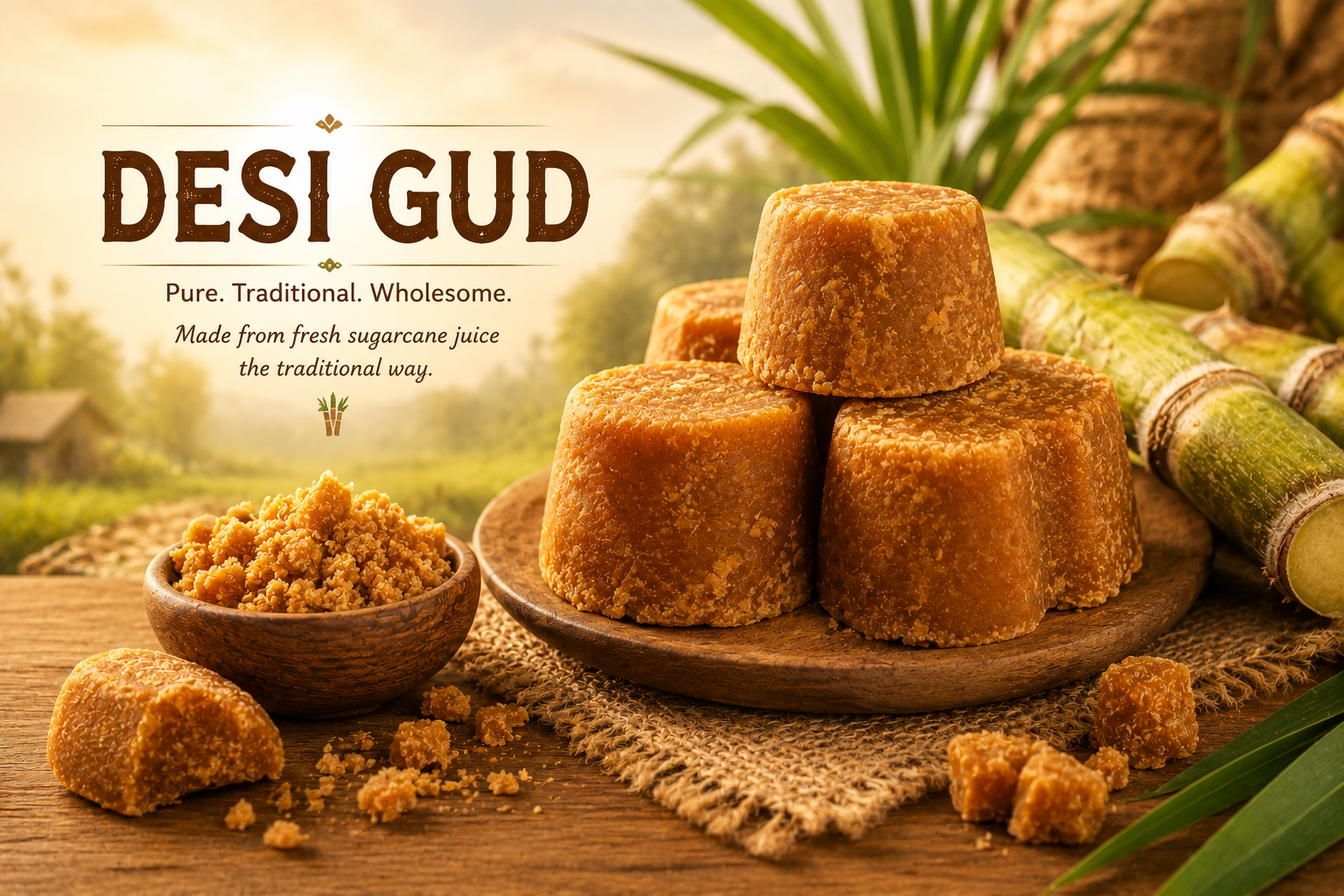
Desi Gud is a time-honored natural sweetener made by slowly boiling fresh sugarcane juice until it transforms into rich, golden jaggery—preserving its authentic taste and natural goodness. It provides flavour and quick energy and may retain small amounts of minerals. However, it remains rich in sugar and should be eaten thoughtfully. Understanding its production and correct use helps consumers avoid exaggerated promises.
Table of Contents
What desi gud is
Nutrition and benefits
Everyday uses
Quality identification
Common mistakes
Frequently asked questions
What Is Desi Gud?
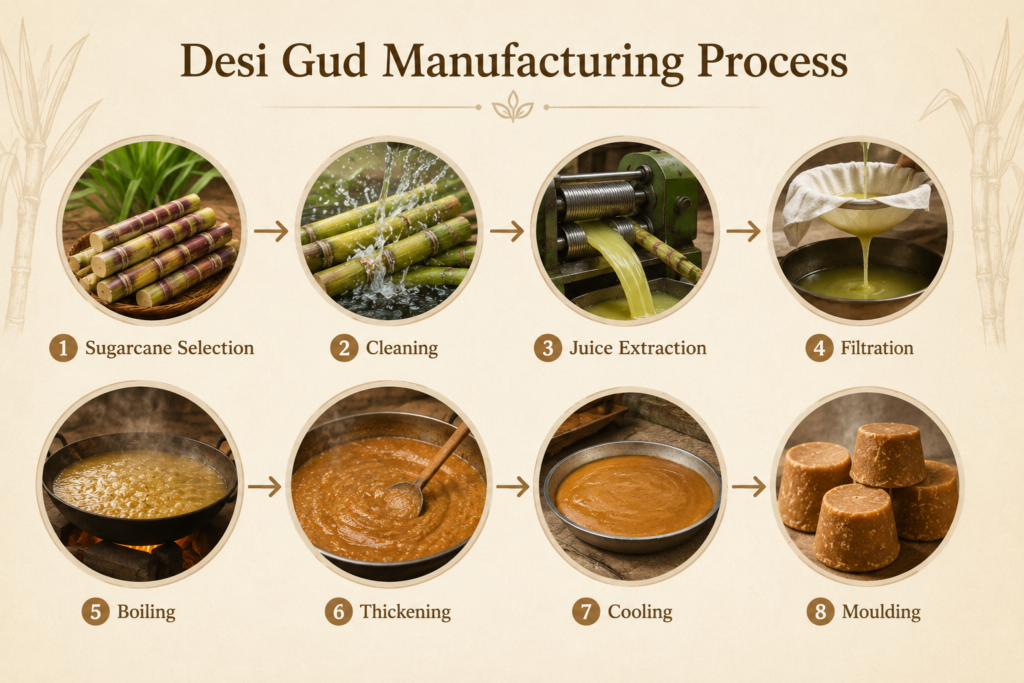
Desi gur is made by cleaning and crushing sugarcane, filtering its juice, boiling it and concentrating it into a thick mass. The mass is cooled and shaped into blocks or cubes.
FSSAI defines cane jaggery as a product obtained by boiling or processing sugarcane juice. Its standard requires at least 90 percent total sugars on a dry weight basis. Jaggery is therefore mainly a concentrated sweetener.
The word desi refers to traditional identity and preparation. It does not prove that a product is pure, organic or free from unwanted substances. Those qualities depend on processing, testing and transparent labelling.
Lorem ipsum dolor sit amet, consectetur adipiscing elit. Ut elit tellus, luctus nec ullamcorper mattis, pulvinar dapibus leo.
Nutritional Profile of Desi Gud
Comparison Point
Desi Gud
White Sugar
Main component
Mostly sugar
Mostly sugar
Processing
Traditionally concentrated
Highly refined
Flavour
Deep and caramel like
Neutral sweetness
Mineral content
May retain small amounts
Usually negligible
Effect on blood sugar
Can raise blood glucose
Can raise blood glucose
Best use
Traditional foods and drinks
General sweetening
Portion control
Still necessary
Still necessary
Realistic Health Benefits of Desi Gud
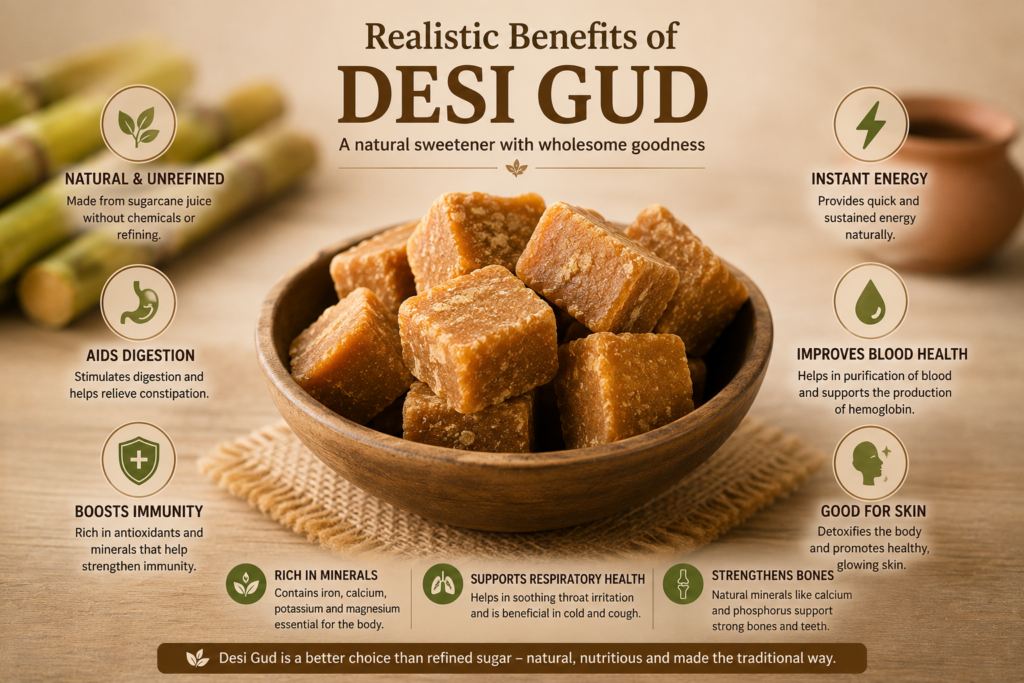
Quick Energy
A small portion can provide rapid energy because desi gud contains readily available sugars. This explains its traditional use during demanding physical work and in winter foods. Portion size matters.
Flavourful Sugar Alternative
Pure desi gud can replace white sugar when its deeper flavour suits the recipe. It adds caramel like notes to porridge, kheer and sesame preparations. However, replacing one spoon of sugar with several spoons of gud is not a healthier exchange.
Place in a Traditional Diet
Gud can be used in familiar foods as a less refined sweetener. Its value is strongest when it forms a small part of a balanced diet rather than being treated as medicine.
The World Health Organization recommends keeping free sugar intake below 10 percent of total energy. Natural sounding sweeteners still require moderation.
Everyday Uses of Desi Gud
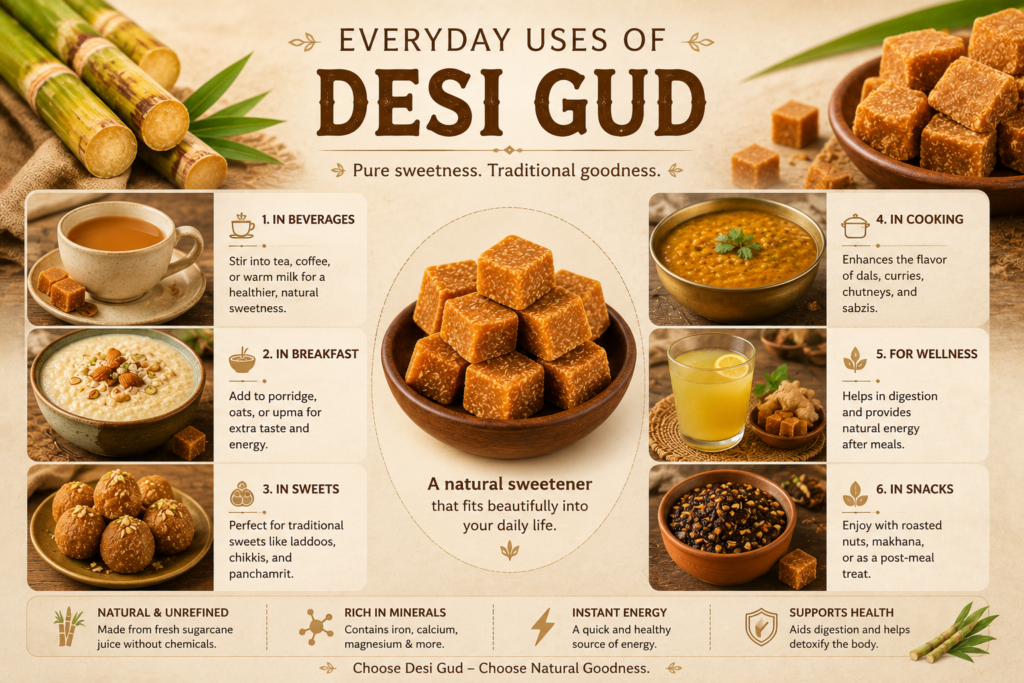
Desi gur can be added to tea, warm milk, porridge and homemade desserts. In milk based drinks, add it after boiling and let the liquid cool slightly because acidity or impurities may cause curdling.
It also works in til laddoo, peanut chikki, halwa and kheer. A small piece can be served with roasted gram or eaten after a meal.
Decide the portion before eating. Breaking from a large block often creates inconsistent servings. Small cubes or measured pieces are easier to manage.
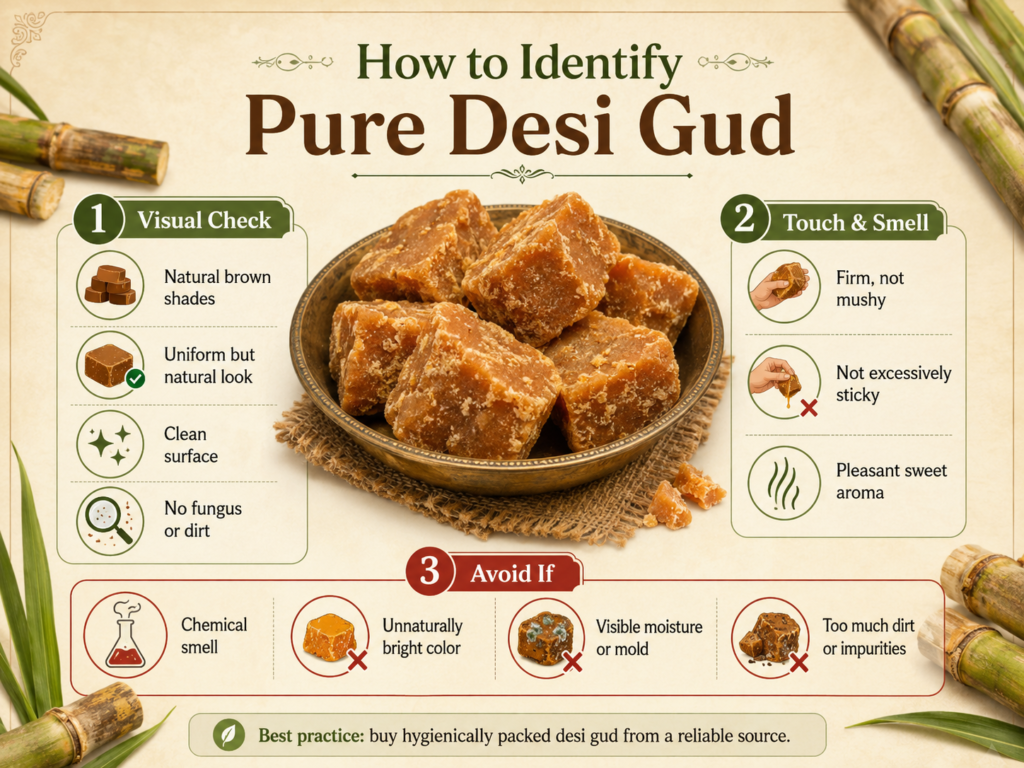
How to Identify Pure Desi Gud
Quality Factor
Positive Sign
Warning Sign
Aroma
Mild sugarcane or caramel aroma
Sour, chemical or burnt smell
Texture
Firm and reasonably dry
Excessively wet or sticky
Surface
Clean and free from mould
Dirt, mould or unusual spots
Taste
Natural sweetness
Chemical or unpleasant aftertaste
Packaging
Properly sealed
Open, torn or moisture affected
Labelling
Ingredients, batch and manufacturer details
Missing or unclear information
Storage condition
Dry and protected from heat
Exposed to steam or sunlight
Common Mistakes to Avoid
The first mistake is assuming that gud can be eaten without limits because it is traditional. It remains a sugar rich food.
The second is treating desi gud as a remedy for anaemia or diabetes. People with diabetes should count jaggery as sugar because it can raise blood glucose quickly.
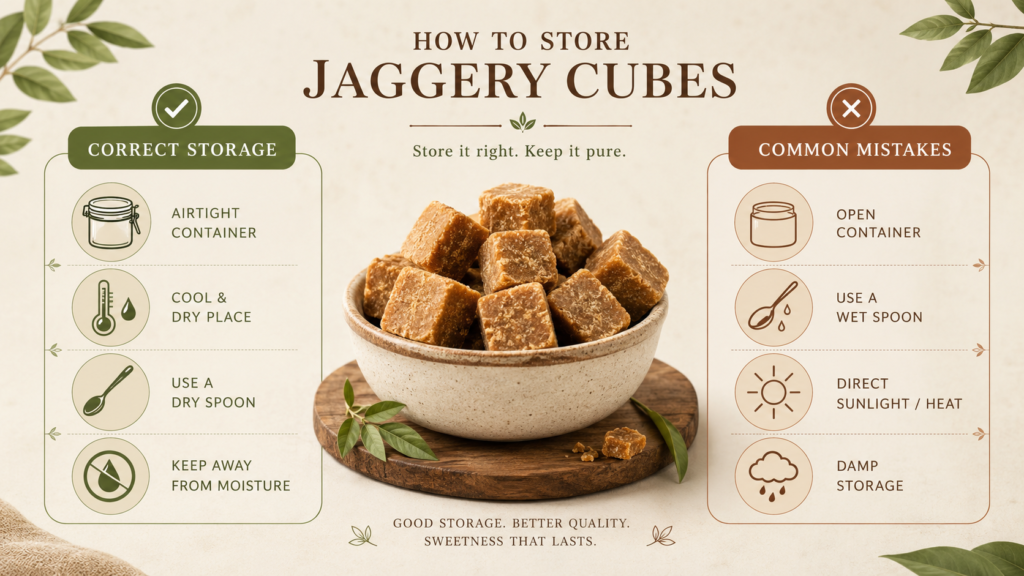
The third is poor storage. Keep gud in a dry airtight container away from steam, sunlight and wet spoons. Discard it if you notice mould or an unusual odour.
Frequently Asked Questions
Is Desi Gud Healthier Than White Sugar?
It may retain more mineral matter and undergo fewer refining steps, but both are concentrated sweeteners. Use either in moderation.
Can Desi Gud Be Eaten Every Day?
A small amount may fit into many diets, but total sugar intake, health conditions and serving size must be considered.
Can People With Diabetes Eat Desi Gud?
Jaggery raises blood glucose and should not be treated as a safe sugar substitute. Personal advice should come from a doctor or registered dietitian.
How Can I Check Pure Desi Gud at Home?
Home checks can reveal smell, moisture and visible contamination, but they cannot confirm chemical purity. Testing is more dependable.
Why Does Desi Gur Become Sticky?
It absorbs moisture from the air. Humid weather, warm packing and an open container can make it soft or sticky.
What Is the Best Way to Use Gud in Tea?
Boil the tea first, reduce the heat and add a measured quantity near the end. For milk tea, adding gud after boiling may reduce curdling.
Select the fields to be shown. Others will be hidden. Drag and drop to rearrange the order.