Is Jaggery Really Better Than Sugar?
A practical comparison of jaggery and sugar based on processing, nutrition, taste, and everyday use
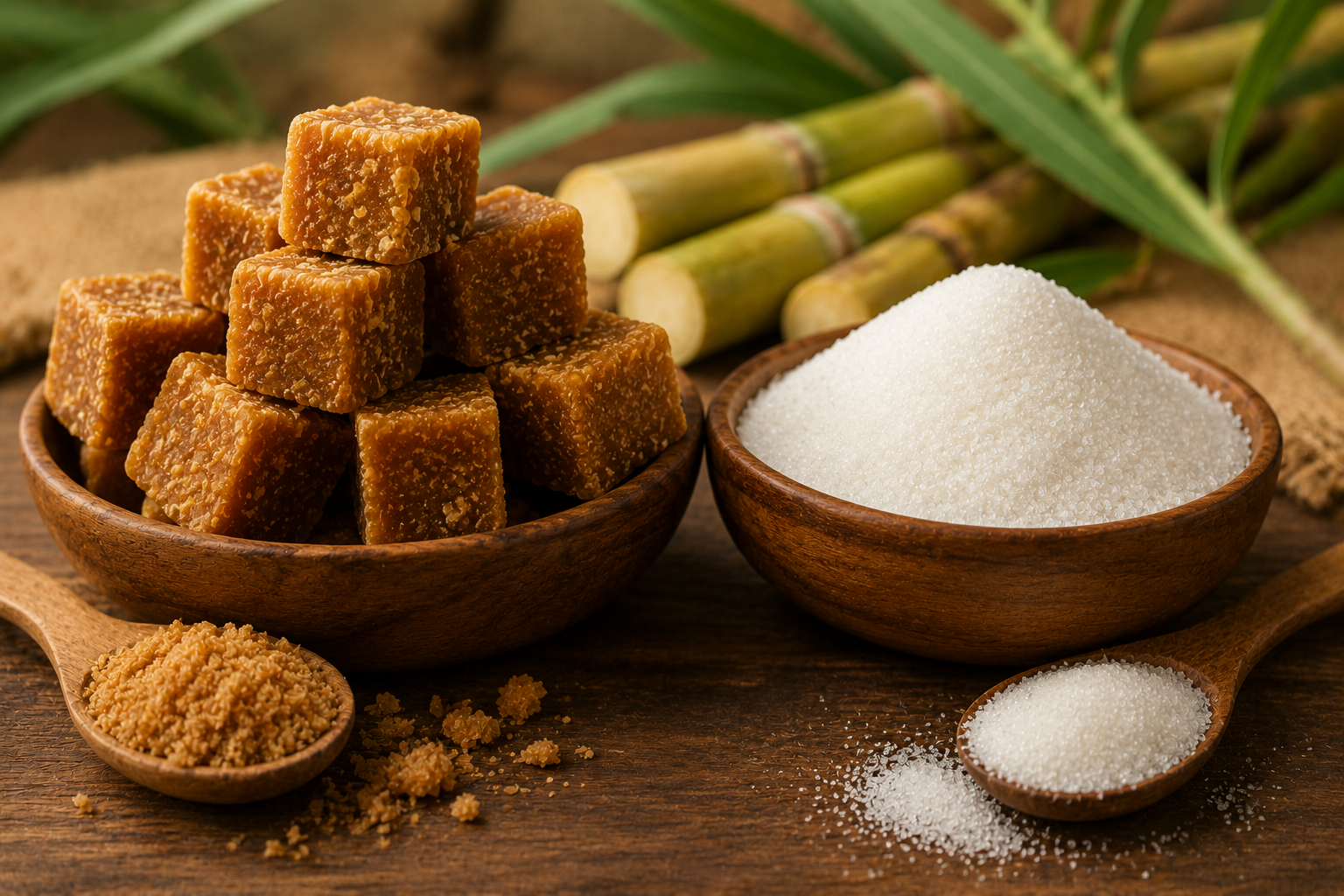
Many people replace white sugar with jaggery believing the change automatically makes tea, sweets, and desserts healthy. The truth is more balanced. Jaggery and sugar are both concentrated sweeteners, so the amount consumed matters more than the colour of the product.
Jaggery is less refined and retains more original sugarcane components. White sugar provides neutral sweetness but undergoes greater refining. The nutritional advantage of jaggery is modest and often exaggerated.
Table of Contents
- How jaggery and sugar are made
- Nutritional differences
- Is jaggery better than sugar
- Taste and everyday use
- Common mistakes
- Buying and usage tips
- Frequently asked questions
How Are Jaggery and Sugar Made?
Jaggery Production
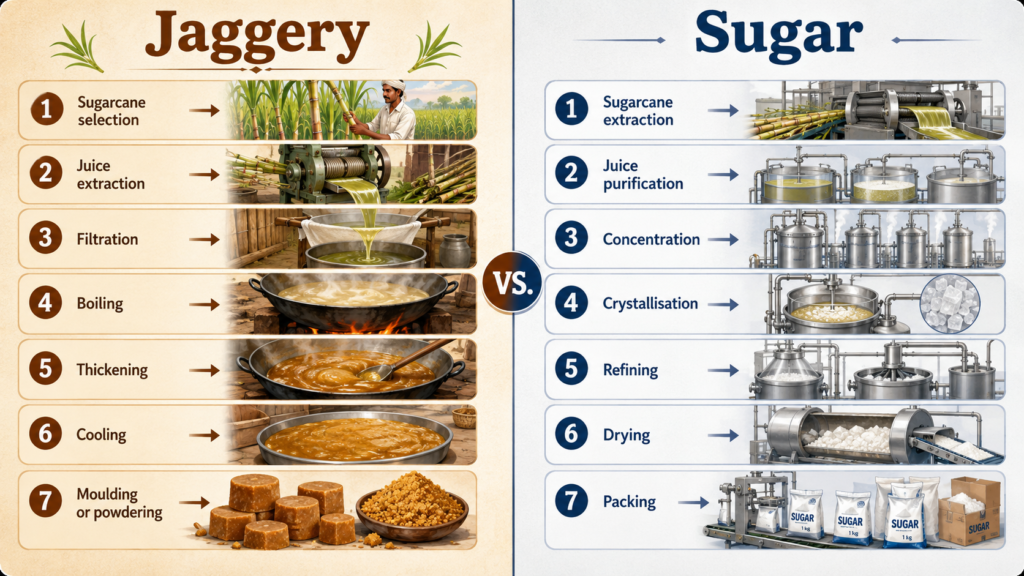
Cane jaggery is made by extracting sugarcane juice, filtering it, heating it, and concentrating it. The thickened material is cooled and shaped into blocks, cubes, or powder.
FSSAI defines cane jaggery as a product obtained by boiling or processing sugarcane juice. Its standard requires at least 90 percent total sugars and sets limits for moisture, ash, and insoluble matter. Added colour is not permitted, and hygienic preparation is required.
Sugar Production
White sugar also begins with sugarcane or sugar beet, but it undergoes further purification, crystallisation, and refining. FSSAI standards require refined sugar to contain at least 99.5 percent sucrose.
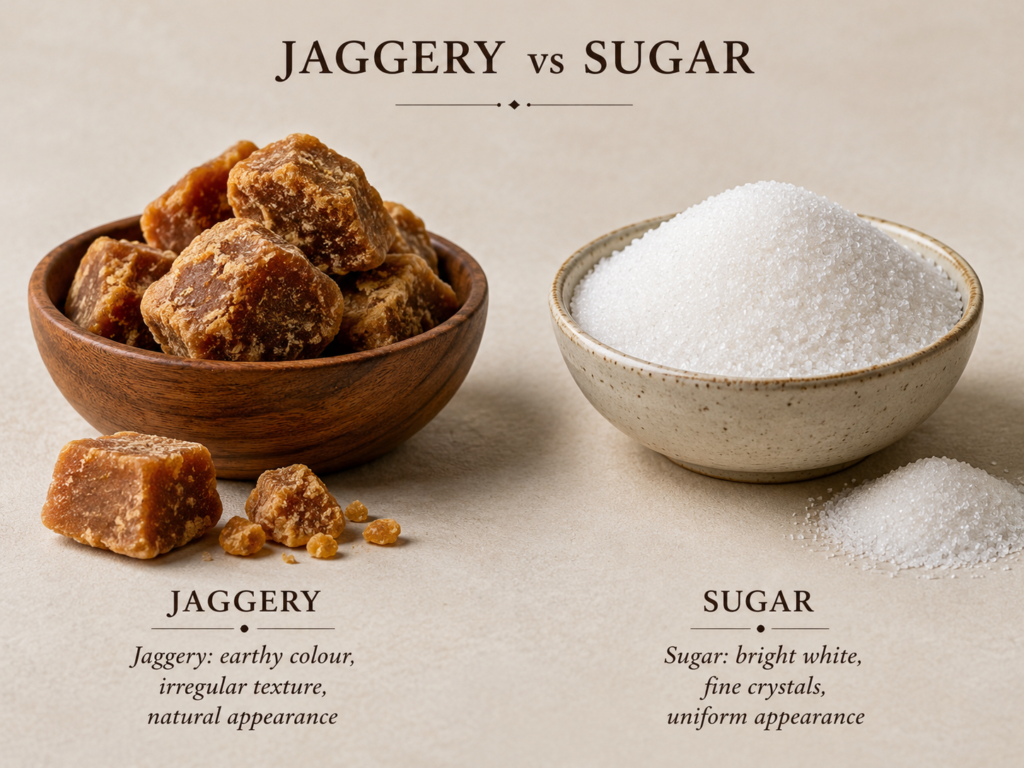
Sugar has a uniform colour and neutral flavour. Jaggery varies because cane variety, heat control, moisture, and storage affect the finished product.
Jaggery and Sugar: The Nutritional Difference
| Comparison Factor | Jaggery | White Sugar |
|---|---|---|
| Main source | Usually concentrated sugarcane juice | Sugarcane or sugar beet |
| Processing | Filtered, boiled, concentrated, and cooled | Purified, crystallised, and refined |
| Appearance | Golden, brown, or dark brown | White crystals |
| Flavour | Rich, earthy, and caramel like | Neutral sweetness |
| Nutritional profile | May retain small amounts of minerals and cane solids | Mainly refined sucrose |
| Blood glucose effect | Still a concentrated sweetener | Still a concentrated sweetener |
| Common uses | Tea, kheer, laddoo, halwa, chikki | Drinks, baking, syrups, and desserts |
| Best approach | Use in measured portions | Use in measured portions |

Is Jaggery Better Than Sugar?
For traditional flavour and lower refinement, jaggery can be the better choice. For precise baking, pale recipes, or neutral sweetness, sugar may work better.
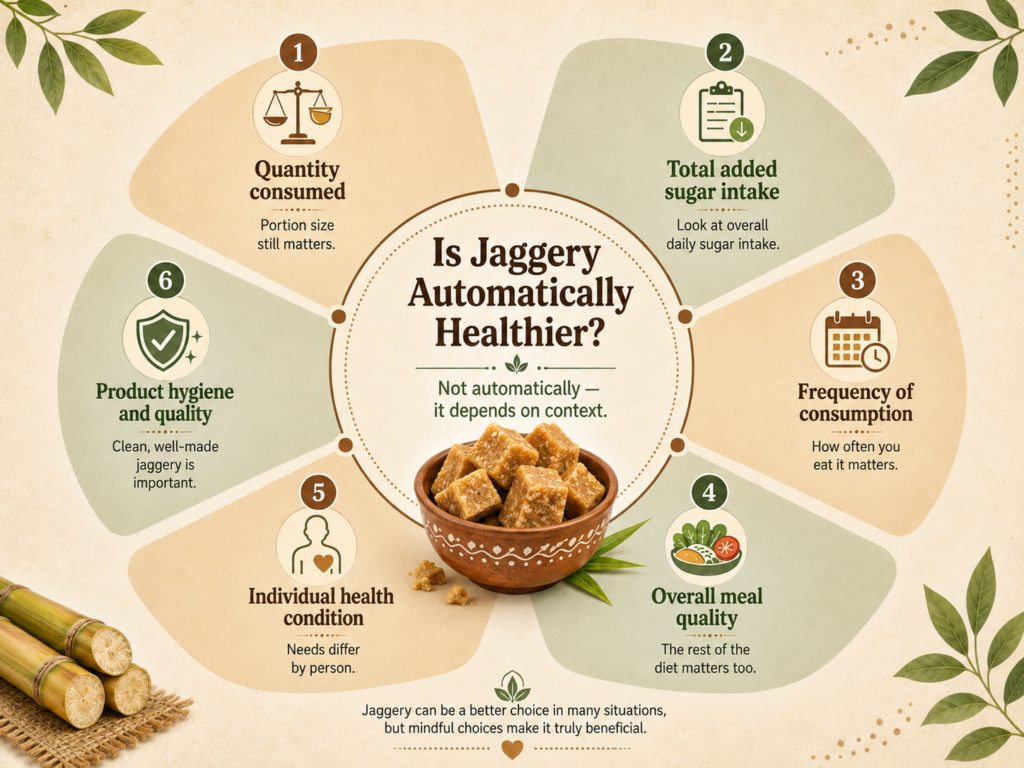
Replacing one spoon of sugar with several spoons of jaggery is not an improvement. Both provide substantial sugars and energy. WHO recommends keeping free sugar intake below 10 percent of daily energy, with a further reduction below 5 percent offering additional benefits.
People monitoring blood glucose should not treat jaggery as unrestricted. Portion size, total carbohydrate intake, and the overall meal still matter.
Taste and Everyday Use
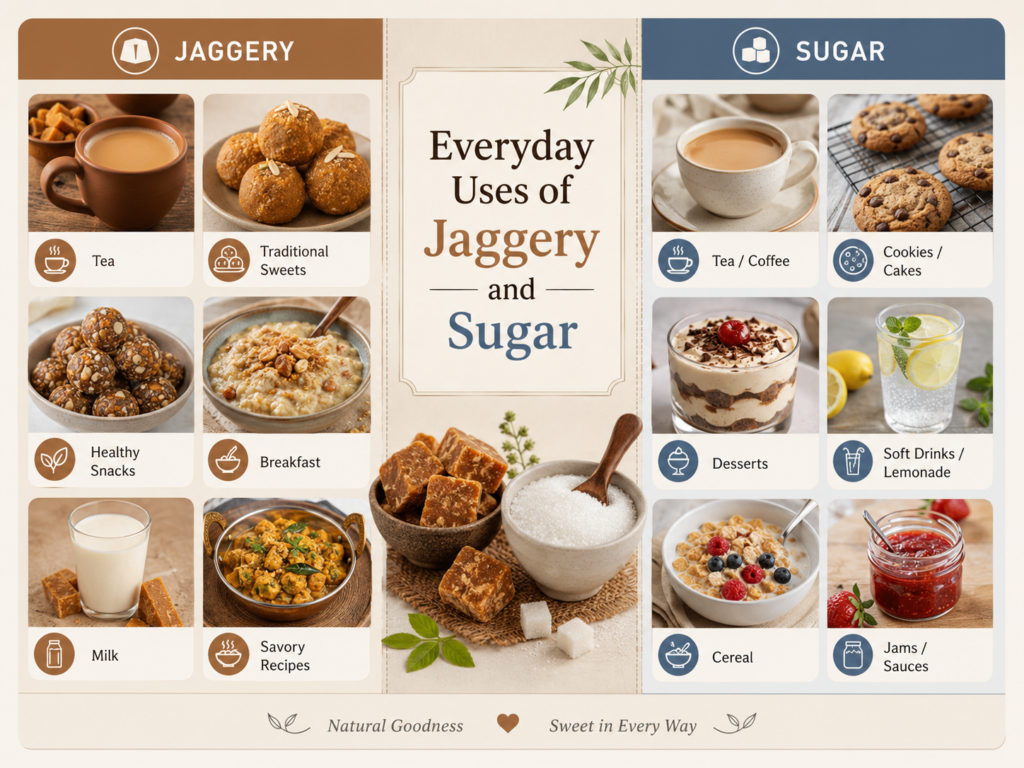
Jaggery has a deeper flavour that may taste earthy, caramel like, or mildly smoky. It suits kheer, chikki, laddoo, tea, halwa, sauces, and regional recipes.
White sugar dissolves predictably and does not strongly change colour or flavour. It is often easier in cakes, syrups, drinks, and recipes requiring exact sweetness.
From our practical experience at Magic Jaggery, customers sometimes expect every batch to have the same shade. Natural jaggery can vary even when production is controlled. Colour alone does not prove purity, nutritional quality, or safe processing.
Practical Buying and Usage Tips
Choose jaggery when you value traditional flavour and less intensive refining. Choose sugar when consistency or neutral taste matters more.
Measure either sweetener instead of pouring freely. Reducing sweetness gradually usually matters more than changing the sweetener while keeping the same high intake.
When buying jaggery, check the ingredients, batch details, packaging, moisture, smell, and producer information. Quality depends on controlled boiling, clean handling, and suitable storage.
Frequently Asked Questions
Is Jaggery Healthier Than White Sugar?
Jaggery is less refined and may retain small amounts of minerals, but it remains rich in sugars. It can be a preferable sweetener, not a health food.
Can People With Diabetes Eat Jaggery?
Jaggery contains substantial sugars and can affect blood glucose. People managing diabetes should follow professional guidance and account for the portion within total carbohydrate intake.
Can Jaggery Replace Sugar in Tea?
Yes. Start with a small quantity because jaggery has a stronger flavour.
Is Brown Sugar the Same as Jaggery?
No. Brown sugar is generally crystalline sugar containing molasses. Jaggery is produced by concentrating sugarcane or palm juice.
How Can I Identify Good Jaggery?
Look for a clean aroma, suitable texture, low excess moisture, secure packaging, batch information, and a clear ingredient label.