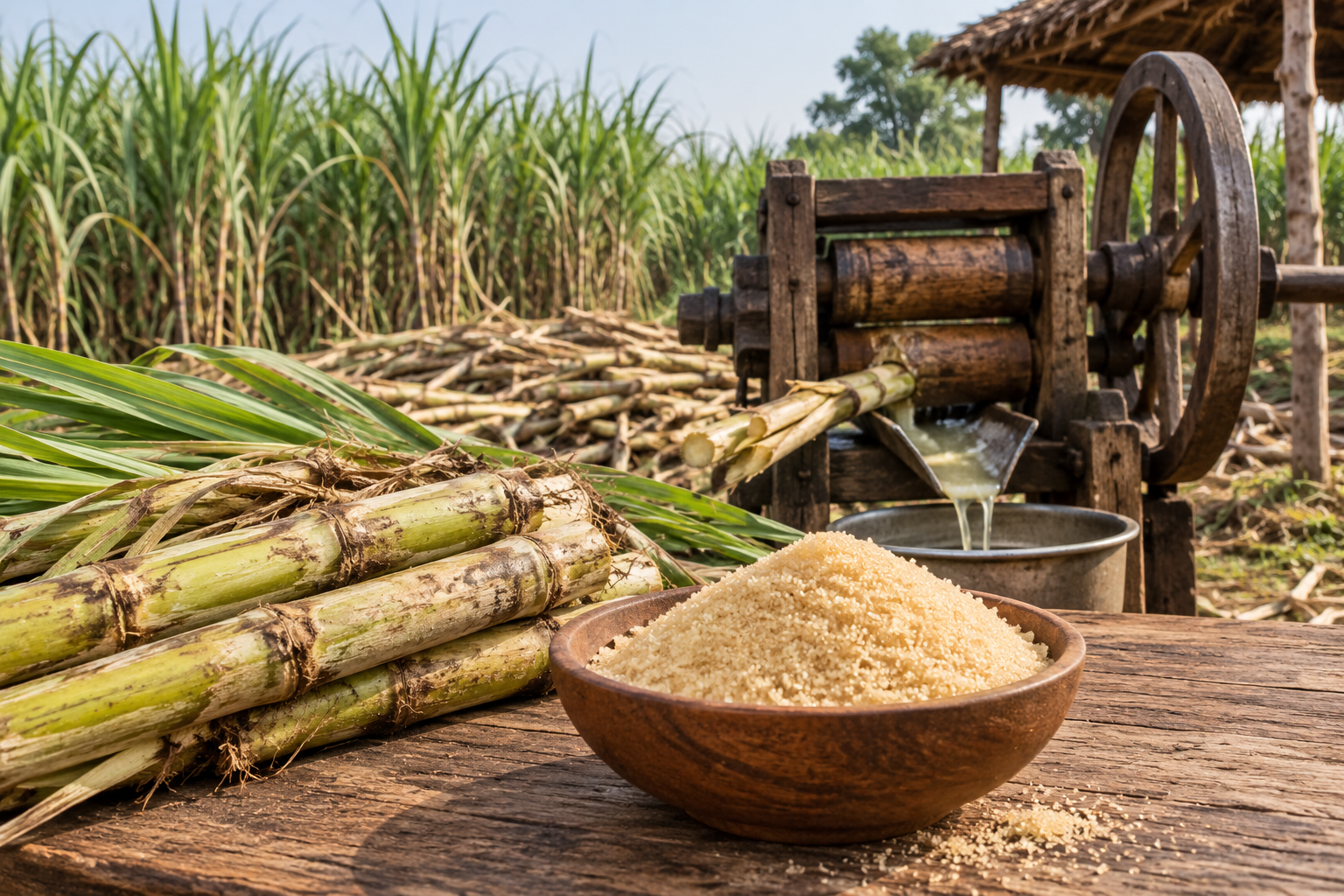
Explore the traditional process behind desi khand sugar.
Many people are becoming more curious about where their food comes from, especially when it comes to sweeteners. Desi khand sugar has gained attention because it is made using a traditional process that preserves more of the natural character of sugarcane than highly refined white sugar. Although both come from the same crop, the way they are processed makes a noticeable difference in appearance, taste, and texture.
At Magic Jaggery, our team has spent over four years working closely with sugarcane processing, from selecting fresh cane to boiling, filtering, packing, and quality checks. This practical experience has helped us understand how careful processing influences the final product and why traditional methods continue to be valued by many households.
Table of Contents
What Is Desi Khand Sugar?
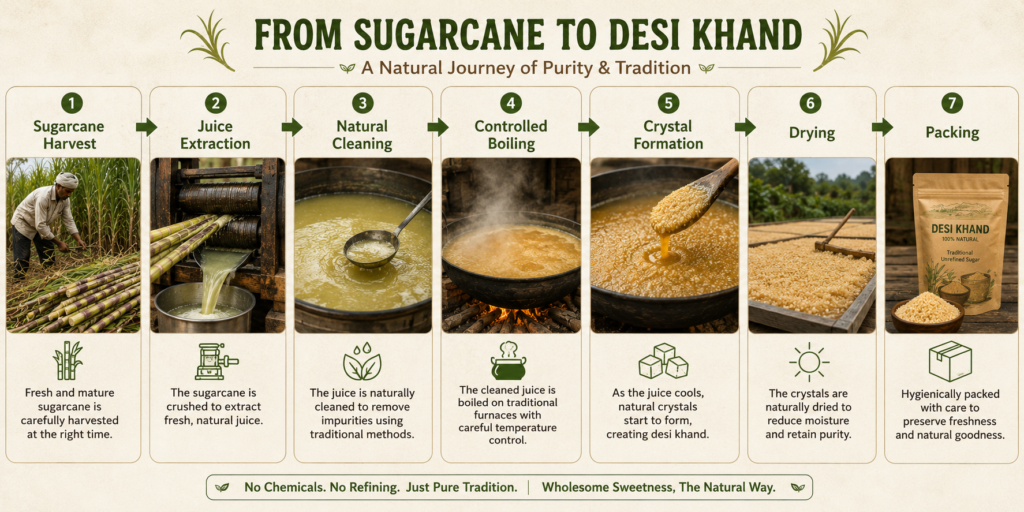
How Desi Khand Sugar Is Made
Why Traditional Processing Matters
Choosing Good Quality Desi Khand Sugar
Common Mistakes Buyers Make
Frequently Asked Questions
What Is Desi Khand Sugar?
Desi khand sugar is a traditional sweetener prepared from sugarcane juice through minimal processing. It is often described as unrefined cane sugar because it undergoes fewer refining steps than regular white sugar.
Fresh sugarcane juice is cleaned, concentrated through boiling, crystallized, and dried without extensive chemical bleaching. As a result, desi khand usually has a light golden or off white color instead of the bright white appearance seen in refined sugar.
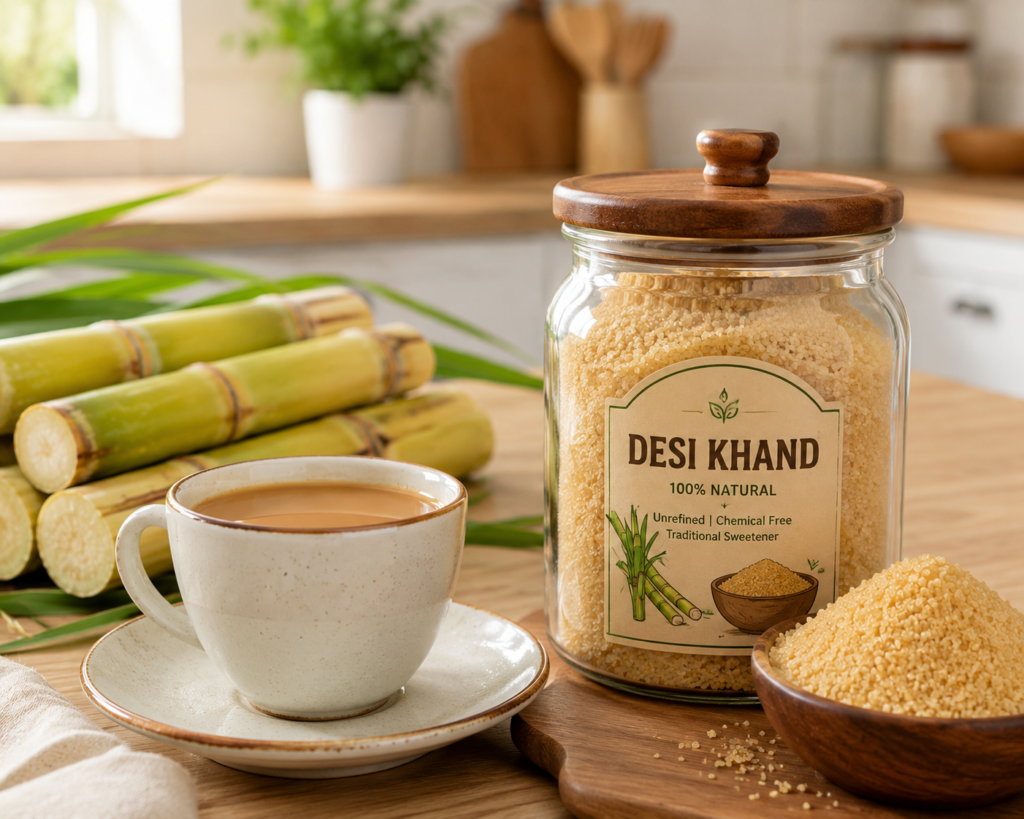
Its mild caramel flavor makes it suitable for tea, coffee, traditional sweets, and everyday cooking.
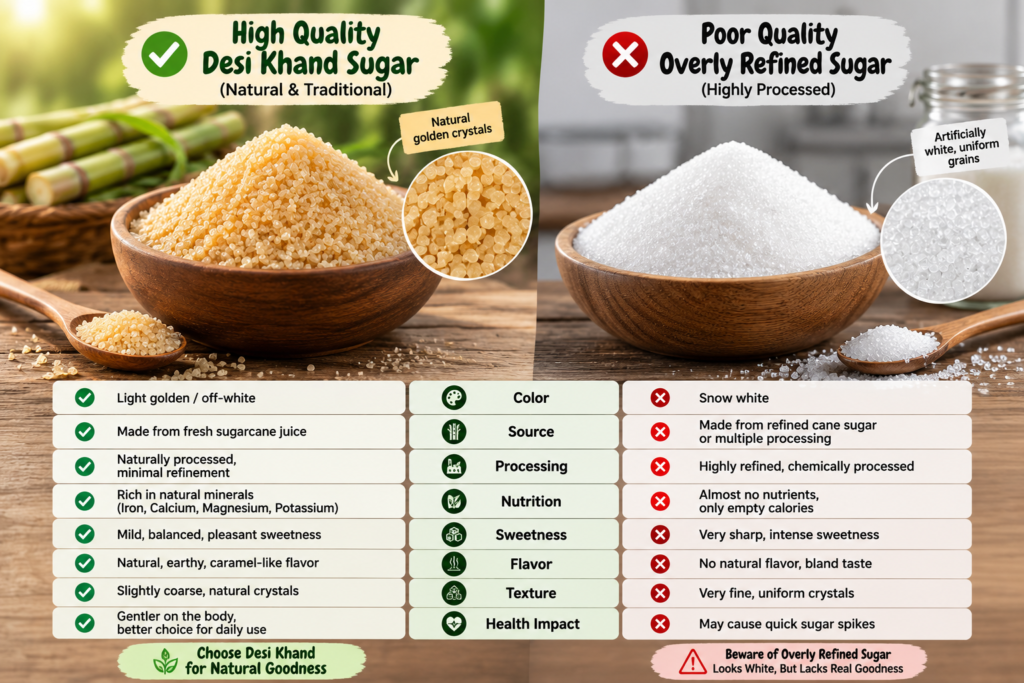
Desi Khand Sugar vs Refined White Sugar
Feature
Desi Khand Sugar
Refined White Sugar
Source
Sugarcane juice
Sugarcane juice
Processing
Minimal processing
Highly refined
Color
Light golden to off white
Bright white
Taste
Mild caramel notes
Neutral sweetness
Texture
Slightly coarse crystals
Fine crystals
Traditional Use
Tea, sweets, cooking
General sweetening
How Desi Khand Sugar Is Made
Step 1: Harvesting Fresh Sugarcane
The journey starts with healthy, mature sugarcane. The quality of the harvested cane directly affects sweetness, aroma, and crystal formation.
Step 2: Juice Extraction
Fresh sugarcane is crushed to extract juice. Since sugarcane begins to lose freshness after harvesting, timely processing helps maintain better quality.
Step 3: Cleaning the Juice
Natural impurities such as plant fibers and soil particles are removed before boiling. Careful filtration produces cleaner juice and supports better crystal formation later in the process.
Step 4: Controlled Boiling
The filtered juice is heated in large pans until water gradually evaporates. During this stage, skilled workers closely monitor temperature and consistency because excessive heating can affect both color and taste.
Step 5: Crystal Formation
As the concentrated syrup cools, sugar crystals begin to develop naturally. These crystals are separated, dried, and prepared for packing.
Step 6: Packaging
Proper packaging protects the product from moisture and contamination. Hygienic handling throughout this stage helps preserve freshness during storage and transportation.
Why Traditional Processing Matters
Traditional processing focuses on preserving the natural qualities of sugarcane instead of producing an extremely refined product.
From our manufacturing experience, we have seen that careful boiling and controlled heating play a significant role in achieving consistent color and texture. Small variations in temperature or cooking time can noticeably change the final product.
A simple example comes from seasonal production. Freshly harvested sugarcane processed on the same day generally delivers more consistent results than cane stored for extended periods before crushing. This is one reason experienced producers pay close attention to harvest timing.
Choosing Good Quality Desi Khand Sugar
Not every product sold as desi khand follows the same production standards. Buyers can use a few simple checks before making a purchase.
Look at the Color
Good quality desi khand usually appears light golden or naturally off white. Extremely bright white crystals may indicate additional refining.
Check the Texture
The crystals should feel dry and free flowing without excessive moisture or hard lumps.
Read the Ingredient List
The label should clearly mention sugarcane as the source. Transparent labeling reflects responsible manufacturing practices.
Buy From Trusted Manufacturers
Reliable producers maintain consistent quality checks, hygienic processing, and clear product information. Customer reviews and repeat purchases often provide useful confidence before buying.
Quick Buying Checklist
Check
Good Quality
Color
Light golden
Aroma
Mild sugarcane smell
Texture
Dry and free flowing
Packaging
Hygienically sealed
Ingredients
Sugarcane only
Storage
Airtight container
Common Mistakes Buyers Make
Many consumers judge quality only by appearance, but this can be misleading.
One common mistake is assuming that whiter sugar is always better. In reality, traditional unrefined cane sugar naturally retains a softer color because it passes through fewer refining stages.
Another mistake is storing desi khand in open containers. Since it can absorb moisture from the air, keeping it in an airtight container helps maintain its texture.
Finally, many buyers overlook manufacturing details. Reading product labels, checking packaging quality, and purchasing from reputable producers are simple habits that support better purchasing decisions.
Frequently Asked Questions
Is desi khand sugar the same as white sugar?
No. Desi khand sugar undergoes less refining than white sugar, giving it a more natural appearance and a mild caramel taste.
Is desi khand sugar considered unrefined cane sugar?
It is commonly described as unrefined cane sugar because it is processed with fewer refining steps than conventional white sugar.
Can desi khand sugar be used in tea and coffee?
Yes. It dissolves well in hot beverages and provides a subtle sweetness with a light sugarcane flavor.
How should desi khand sugar be stored?
Store it in a clean, airtight container away from moisture and direct sunlight to maintain quality.
Why does desi khand sugar vary in color?
Natural differences in sugarcane variety, seasonal conditions, and traditional processing methods can produce slight variations in color without affecting quality.
Select the fields to be shown. Others will be hidden. Drag and drop to rearrange the order.