Learn what jaggery is, how Gur and Gud are made, the main types, quality signs, storage tips, uses, and buying mistakes.
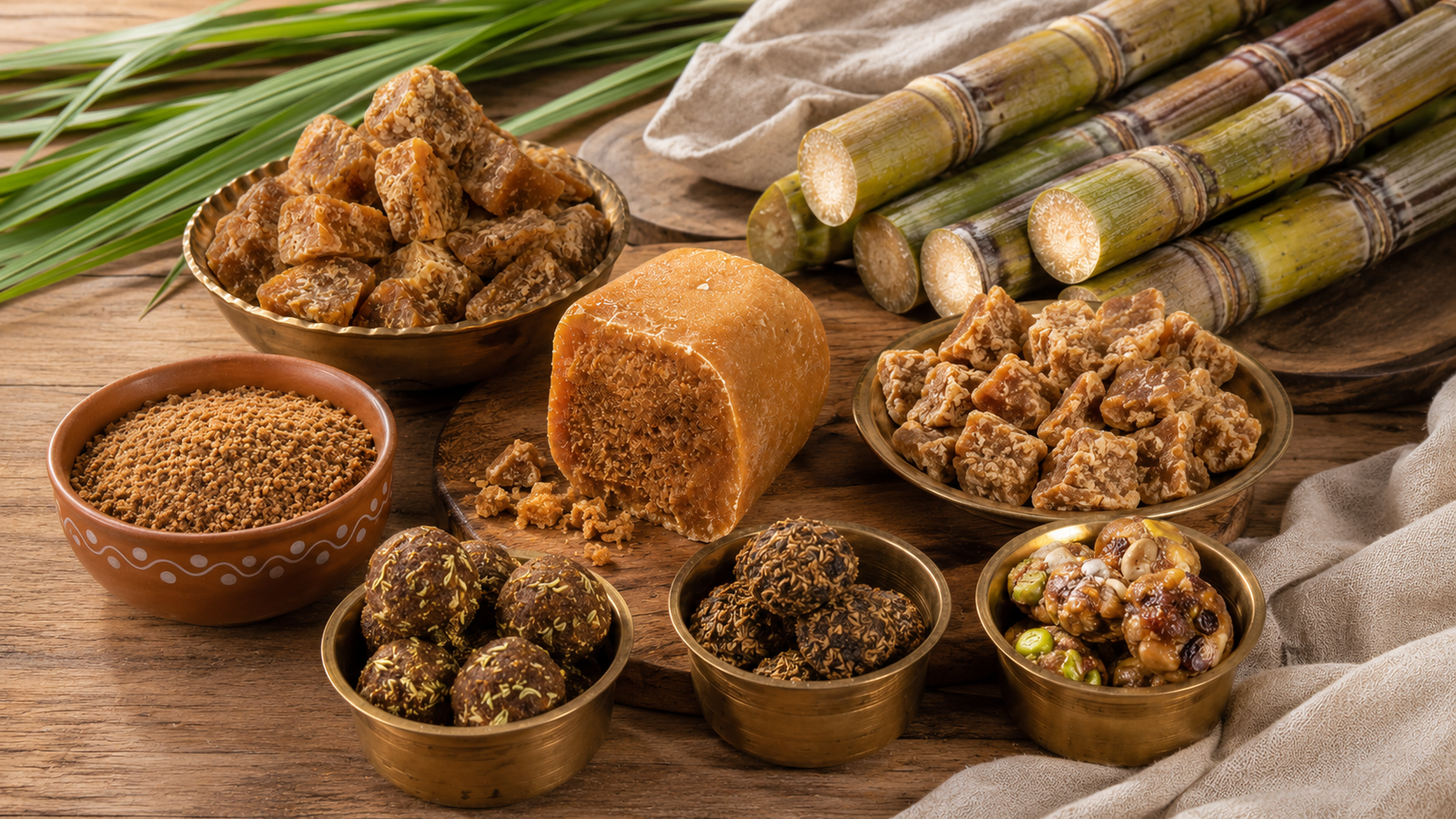
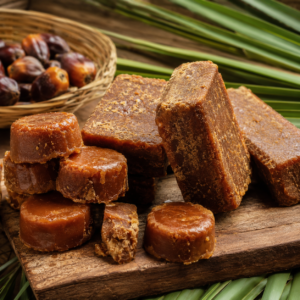
Jaggery is a traditional sweetener made by concentrating sugarcane juice or the sap of certain palm trees. Across India, it is also known as Gur or Gud. Its warm colour, deep sweetness, and aroma come from the natural juice and the way it is processed.
However, all Gud is not equal. Quality changes with the crop, juice cleanliness, boiling control, storage, and packaging. After working closely with Gud production for several years, we have seen buyers judge a product only by colour. Colour alone does not prove quality.
This guide explains what gur is, how it is made, the main types, and how to choose it wisely.
Table of Content
What is jaggery?
How jaggery is made
Main types of jaggery
Quality checks
Buying and storage mistakes
FAQs
What Is Jaggery?
Jaggery is an unrefined or minimally refined sweetener. Natural juice is heated until much of its water evaporates. The thick syrup is then cooled and shaped into blocks, cubes, granules, or powder.
Sugarcane jaggery is common in North India, while palm varieties are used in several southern and eastern regions.
Jaggery may retain small amounts of naturally occurring minerals, but it is still concentrated sugar and should be used sensibly.
How Is Jaggery Made?
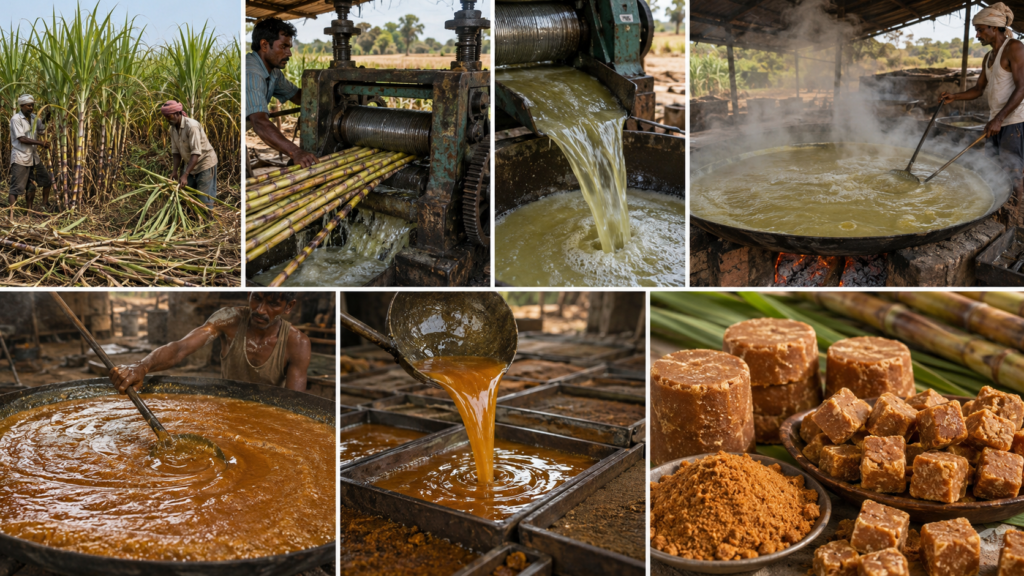
Fresh, mature sugarcane is washed, crushed, and filtered. The extracted juice is heated in a large pan, while foam and visible impurities are removed.
As water evaporates, the juice becomes a thick syrup. If removed too early, the jaggery may stay sticky. If cooked too long, it can become hard, bitter, or unusually dark.
The syrup is then cooled and shaped. Every batch behaves differently, so experienced producers adjust heat and timing according to the cane.
Main Types of Jaggery
Sugarcane Gud
This is the most familiar form of Gur in India. It has a rich sweetness with mild earthy and caramel notes. Blocks suit traditional cooking, powder dissolves quickly, and cubes offer easier portion control.
Palm Gud
Palm Gur is made from palm sap. Its flavour is usually deeper than sugarcane gur. It can cost more because sap collection is seasonal and requires careful handling.
Date Palm Gud
Date palm gur is popular in eastern India, especially in winter sweets. It often has a soft texture and strong aroma, so careful storage is important.
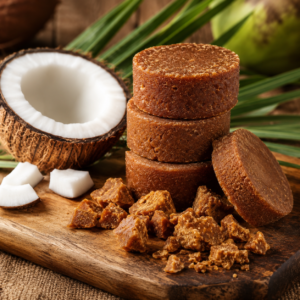
Coconut Gud
Coconut gur is prepared from coconut palm sap. It has a dark appearance and bold flavour and is mainly used in selected regional dishes.
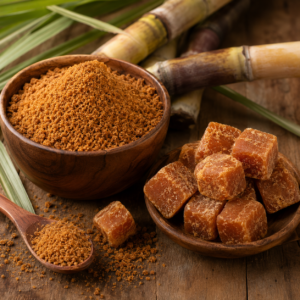
Jaggery Powder and Cubes
Powder and cubes are product forms, not separate raw materials. Powder should be protected from moisture, while cubes offer convenient portions.
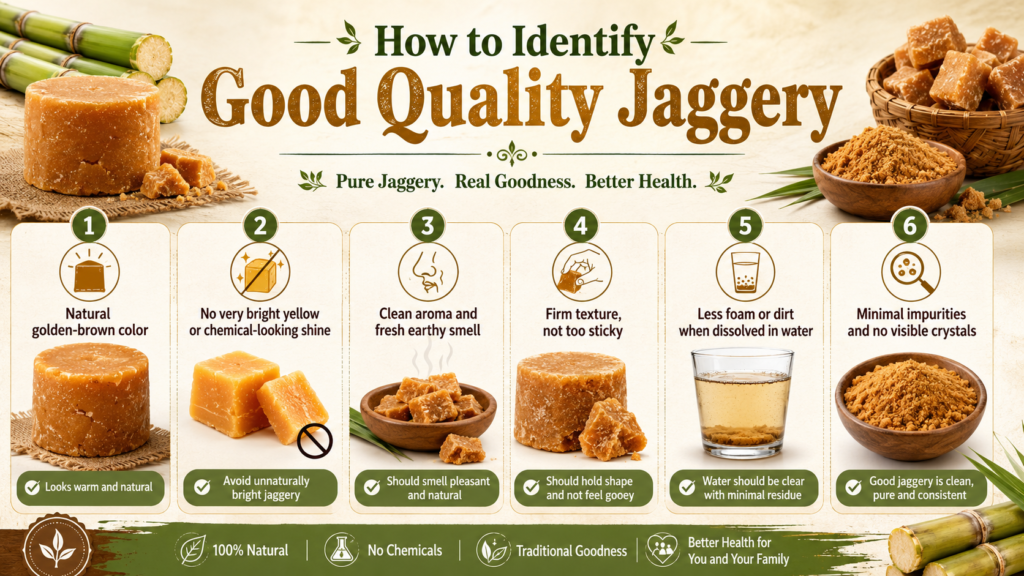
How to Identify Good Quality Jaggery
Do not rely only on colour. Very light gur is not automatically pure, and darker jaggery is not automatically inferior.
It should smell naturally sweet and slightly earthy, without a chemical or fermented odour. It should also be free from dirt, fungal growth, and unusual patches.
For powder, check for excessive wetness or heavy lumps. Mild clumping can occur in humid weather, but too much moisture may indicate poor storage or packaging.
The label should show ingredients, net quantity, batch details, packed date, best before information, manufacturer details, and required food licence information.
At Magic Jaggery, feedback from more than 2 lakh customers has reinforced one lesson. Repeat buyers value consistent taste, cleanliness, texture, and packaging more than an artificially perfect colour.
Common Buying and Storage Mistakes
A common mistake is choosing jaggery only because it looks bright or golden. Another is leaving an opened packet near steam, sunlight, or a damp kitchen surface.
Store jaggery in a clean, dry, airtight container. Use a dry spoon for powder and keep it away from strong smelling foods. Follow the storage instructions and best before date.
Frequently Asked Questions
Is jaggery healthier than sugar?
Gud is less refined and may retain small amounts of minerals, but it is still sugar. Portion control is important.
What is the difference between Gur, Gud, and jaggery?
There is no major difference. Gur and Gud are common Indian names for jaggery.
Which type of jaggery is best?
Powder is convenient for mixing, cubes help with portioning, and blocks work well in traditional cooking.
Why does Gud become soft?
Gur absorbs moisture from the air. Humidity, heat, and weak packaging can make it soft or sticky.
Can jaggery be used in tea?
Yes. Powder or small cubes can be stirred into tea. Adding it after reducing the heat often gives better control over taste.
How should jaggery be stored?
Keep it in an airtight container in a cool, dry place away from sunlight, moisture, and strong odours.
Select the fields to be shown. Others will be hidden. Drag and drop to rearrange the order.