Learn what desi khand is, how it is made, its benefits, drawbacks, uses, quality signs, and how it compares with refined sugar.
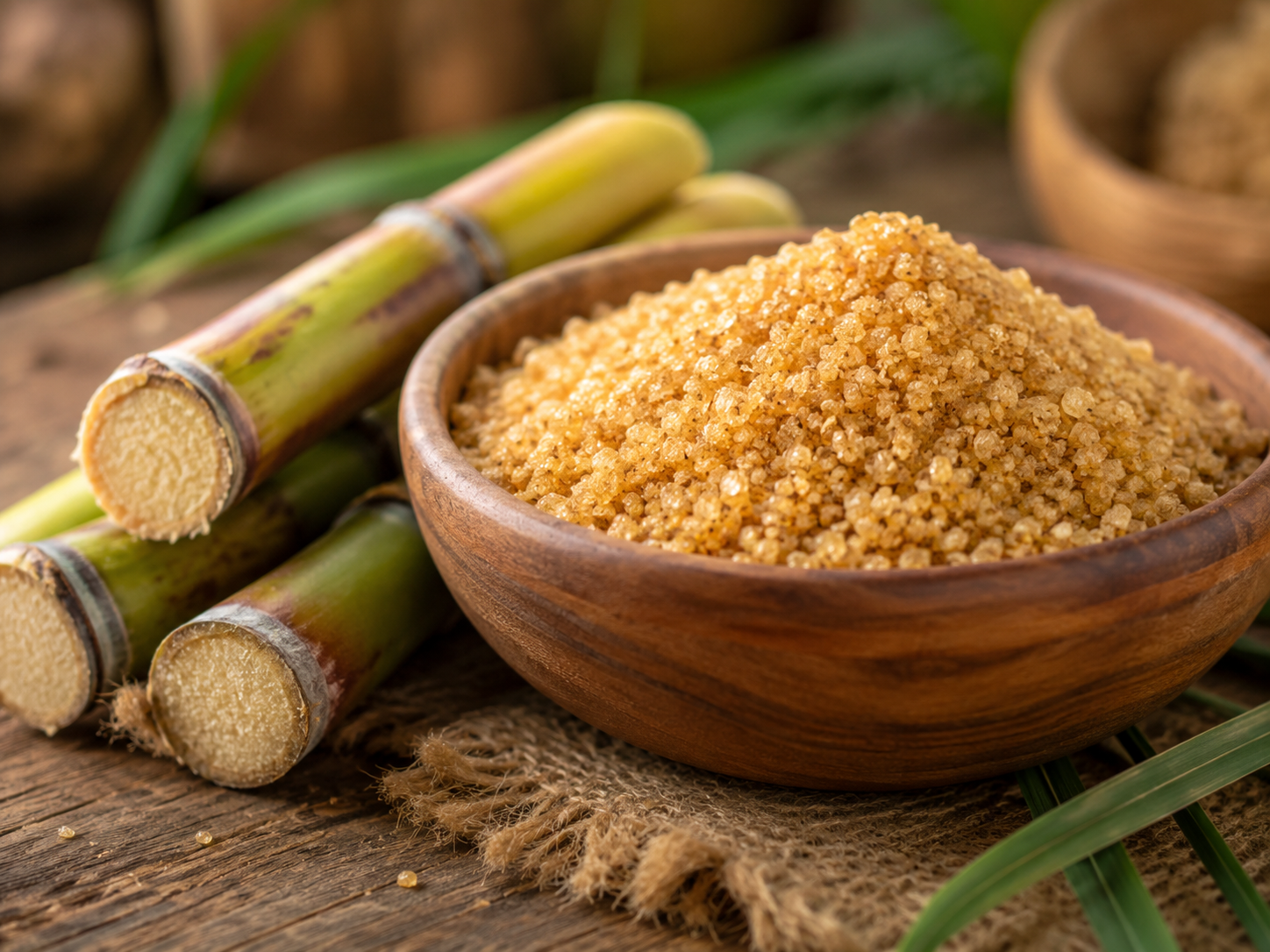
Desi khand is a traditional sugarcane sweetener known for its light brown colour, mild caramel taste, and less refined character. Many people choose it because they prefer a sweetener closer to traditional sugarcane processing than refined white sugar.
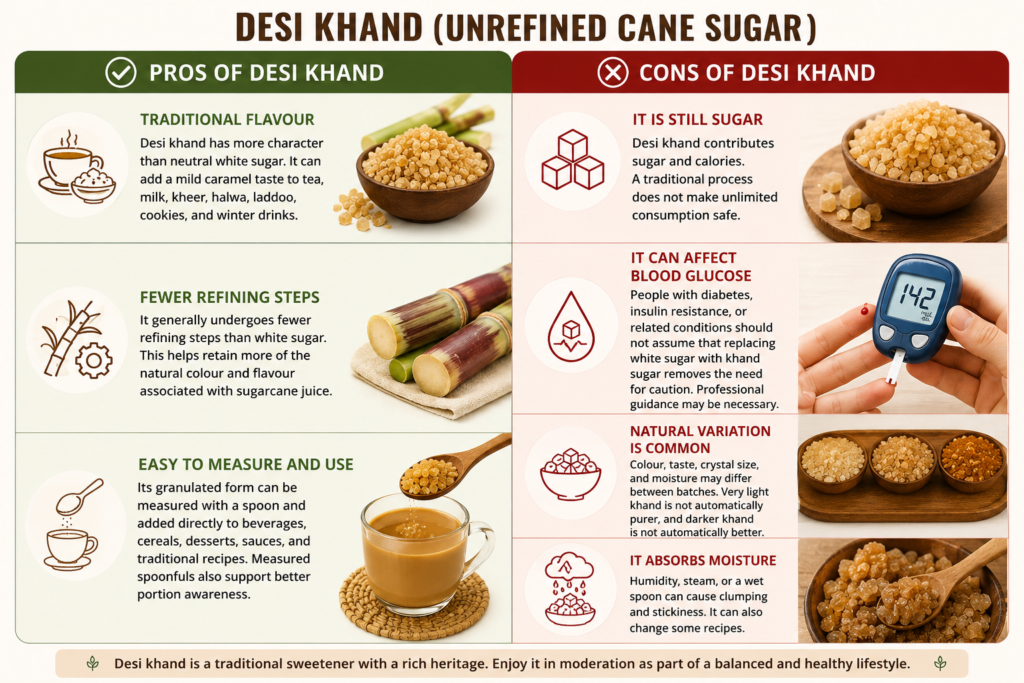
However, desi khand is still sugar. Its value lies mainly in its flavour, texture, processing style, and practical use. It should not be treated as a health food or consumed without limits.
At Magic Jaggery, our team has worked with sugarcane selection, juice extraction, boiling, quality checking, packaging, and distribution for several years. This experience has taught us that colour alone cannot confirm quality. Aroma, cleanliness, moisture, texture, processing control, and storage matter just as much.
Table of Contents
What desi khand is
How it is made
Pros and cons
Comparison with refined sugar
Quality and storage
Frequently asked questions
What Is Desi Khand?
Desi khand is a granulated sweetener made from sugarcane juice. It is usually less refined than white sugar and has a beige, golden, or light brown appearance. It is also commonly called khand sugar.
The flavour is softer than refined sugar, with mild sugarcane and caramel notes.
Desi khand is sometimes described as raw cane sugar. Processing methods vary, so buyers should rely on the ingredient list and manufacturer information rather than the name alone.
How Is Desi Khand Made?
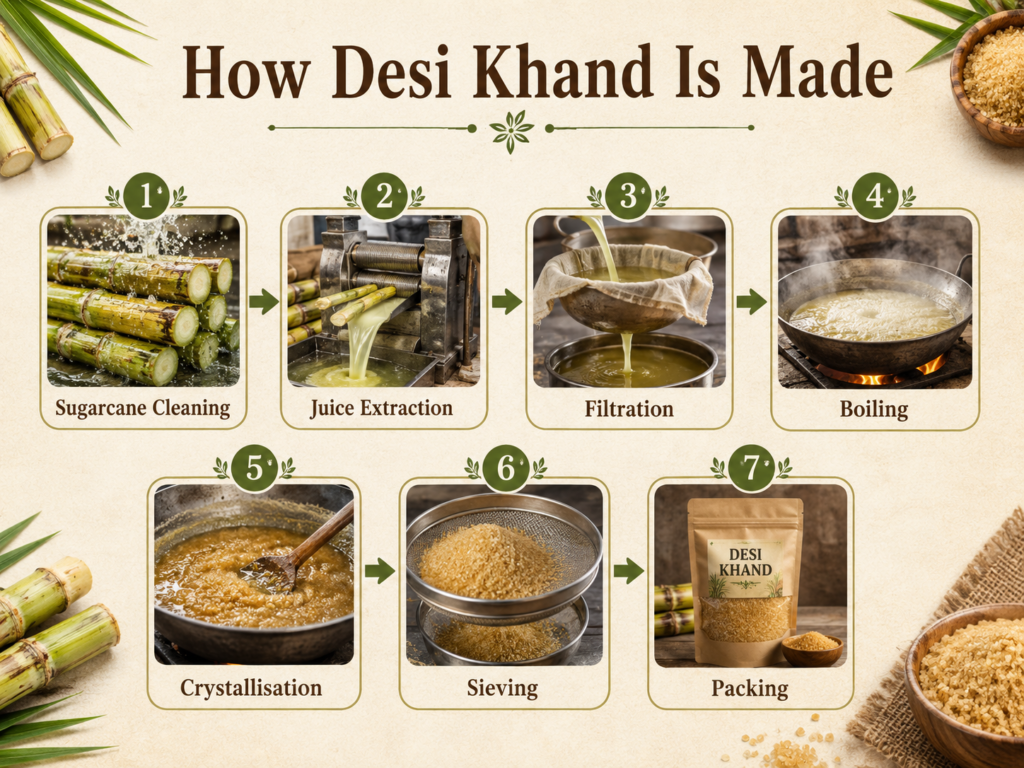
Freshly harvested sugarcane is thoroughly washed before being crushed to extract its nutrient-rich juice. The juice is filtered to remove visible fibre, soil, and plant material.
It is then heated until much of the water evaporates. Foam and impurities are removed during boiling.
The concentrated syrup is cooled to form crystals or granules. It may then be dried, sieved, inspected, and packed.
Production control matters. Excess moisture may make the product sticky, while overheating may create a burnt taste or unusually dark colour. Crop maturity and temperature can affect each batch.
Pros and Cons of Desi khand
Desi Khand Compared With Refined Sugar
Feature
Desi Khand
Refined White Sugar
Source
Sugarcane juice
Sugarcane or sugar beet
Processing
Generally less refined
Highly refined
Colour
Beige, golden, or light brown
White
Flavour
Mild sugarcane and caramel notes
Neutral sweetness
Texture
Granular with natural variation
Fine and highly uniform
Moisture response
May absorb moisture and form lumps
Usually remains dry longer
Common uses
Tea, milk, kheer, halwa, sweets
Beverages, baking, desserts
Consumption advice
Use in moderation
Use in moderation
How to Identify Good Quality Desi Khand
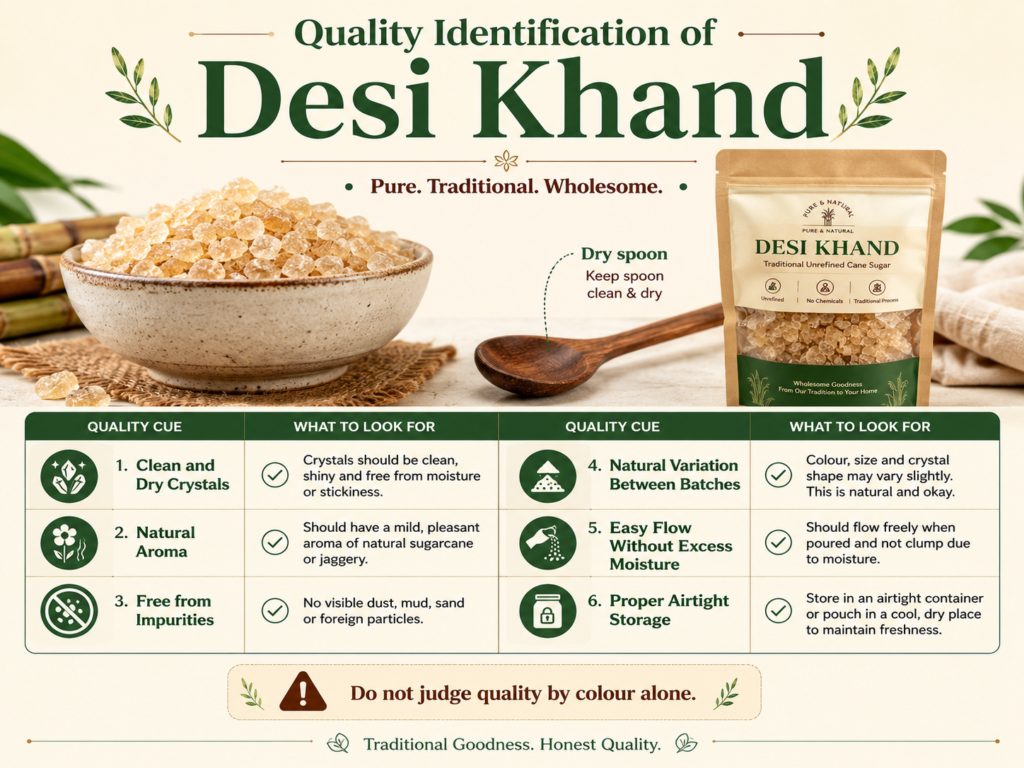
Good quality desi khand should have a clean, naturally sweet aroma. Sour, chemical, fermented, or burnt smells may indicate processing or storage problems.
Mild clumping can occur in humid weather, but wet or sticky lumps may suggest excess moisture. The product should be free from visible dirt, insects, fungal growth, and unusual patches.
Do not judge it by colour alone. Review aroma, texture, cleanliness, packaging, and label transparency together.
The pack should mention the ingredient, net quantity, batch details, packed date, best before information, manufacturer details, and required food licence information.
More than two lakh customers have purchased from Magic Jaggery. Their feedback shows that consistent taste, clean packaging, natural aroma, and dependable texture matter more than an artificially uniform appearance.
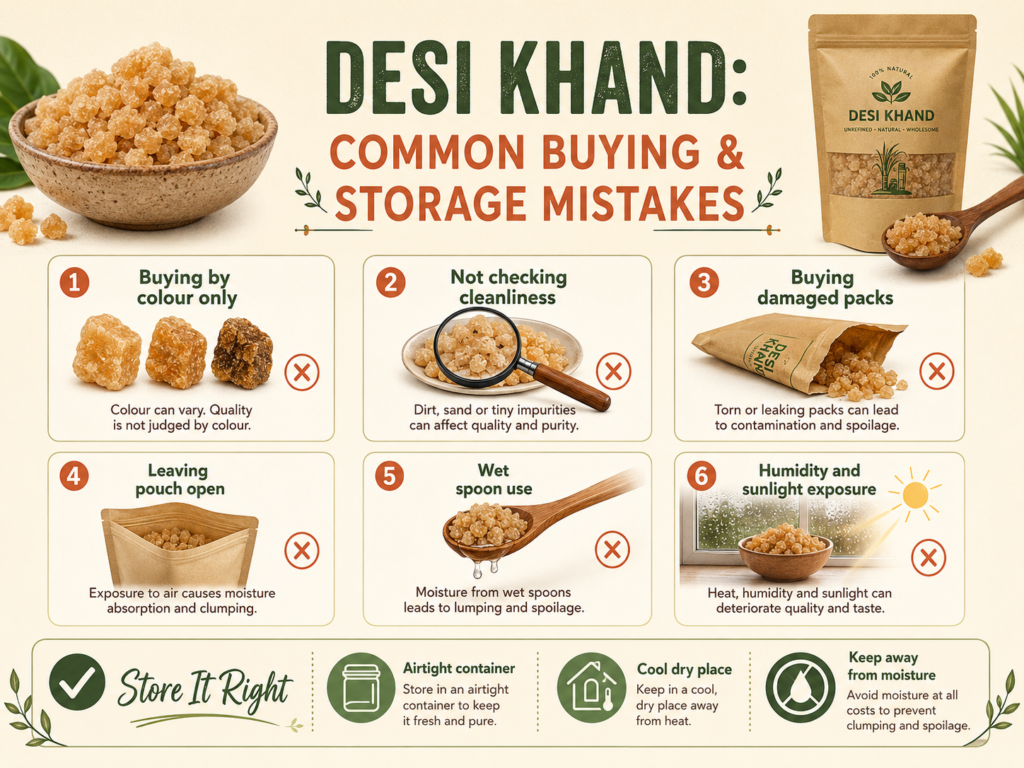
Common Buying and Storage Mistakes
A common mistake is buying desi khand only because it looks pale. Another is purchasing more than the household can use while it remains fresh.
After opening, store it in a clean, dry, airtight container. Keep it away from sunlight, steam, strong odours, and humid areas. Always use a dry spoon.
Frequently Asked Questions
Is desi khand healthier than sugar?
It is generally less refined, but it remains a concentrated sweetener and should be used in moderation.
Is desi khand the same as jaggery powder?
No. Their processing, texture, moisture, and final form can differ.
Can desi khand be used in tea?
Yes. It may give tea a mild caramel flavour.
Why does desi khand form lumps?
It absorbs moisture from air, open packaging, steam, and wet spoons.
Can people with diabetes consume desi khand?
It can affect blood glucose. Medical guidance is advisable before regular use.
Select the fields to be shown. Others will be hidden. Drag and drop to rearrange the order.