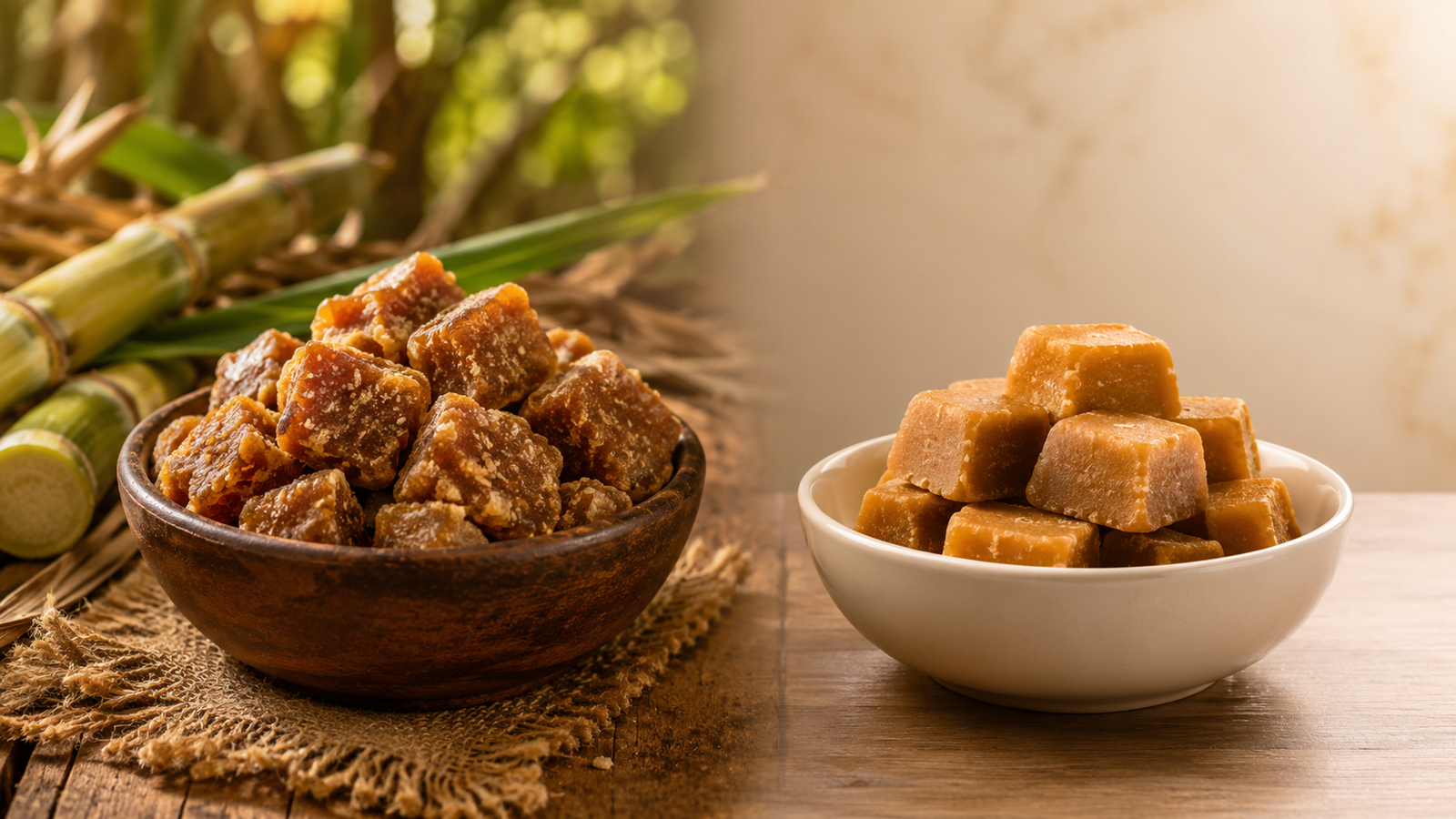
What Makes Organic Jaggery Different from Regular Jaggery?
A practical comparison of organic jaggery and regular jaggery based on farming, processing, certification, quality, and traceability
Organic jaggery is often presented as a healthier or purer alternative to regular jaggery. However, the real difference is more detailed than colour, taste, or appearance.
The distinction usually begins at the farm. It depends on how the sugarcane is grown, what inputs are used, how the juice is processed, and whether the claims can be verified through certification and records.
At Magic Jaggery, we have worked closely with sugarcane farmers and observed jaggery production from cane selection to final packing. Based on that experience, one fact is clear. A dark colour does not automatically prove purity, and an organic label does not automatically guarantee good processing.
This guide explains what consumers should actually examine before choosing between organic jaggery and regular jaggery.
Table of Contents
What is organic jaggery
Key differences between both types
Does organic jaggery offer better nutrition
How to identify dependable organic gud
Frequently asked questions
What Is Organic Jaggery?
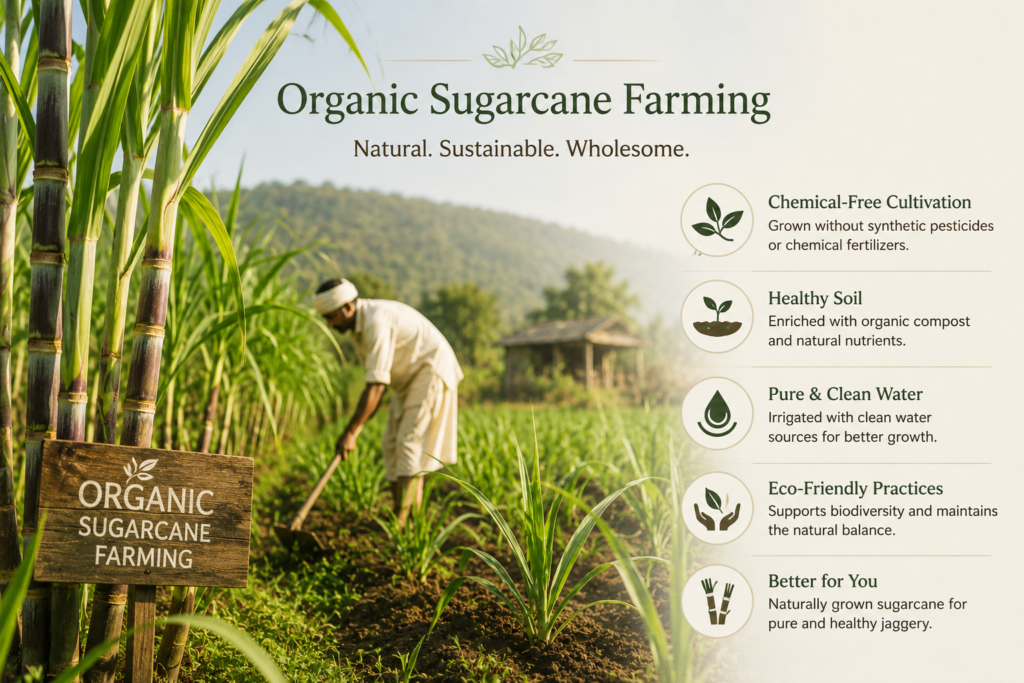
Organic jaggery is made from sugarcane grown according to recognised organic farming practices. Such farming generally avoids synthetic pesticides, chemical fertilisers, and genetically modified planting material.
However, farming is only one part of the process.
The sugarcane must also be handled separately, processed under controlled conditions, and protected from mixing with conventionally grown cane. Proper records should connect the final product with its farm source and production batch.
This traceability is what gives genuine organic gud greater credibility.
A product should not be described as certified jaggery merely because the manufacturer says the sugarcane was grown naturally. Certification requires inspection, documentation, approved farming practices, and regular compliance checks by an authorised organisation.
Organic Jaggery vs Regular Jaggery
Comparison Factor
Organic Jaggery
Regular Jaggery
Sugarcane farming
Produced from cane grown under recognised organic practices
Usually produced from conventionally grown sugarcane
Certification
May carry valid organic certification
Organic certification is not required
Traceability
Usually supported by farm and batch records
Traceability depends on the producer
Processing
Requires controlled handling and separation
Processing methods vary by manufacturer
Colour
May be golden, brown, or dark brown
May also be golden, brown, or dark brown
Nutrition
Mainly a concentrated sugarcane sweetener
Mainly a concentrated sugarcane sweetener
Price
Usually higher due to certification and handling
Generally more affordable
Main advantage
Farming standards and traceability
Wider availability and lower price
Is Organic Jaggery More Nutritious?
Organic jaggery and regular jaggery are both concentrated sweeteners mainly made from sugarcane juice. Their basic nutritional profile can be similar.
Organic farming may reduce exposure to certain synthetic agricultural inputs, but consumers should not treat organic jaggery as a medicine or unlimited health food.
Jaggery still contains a significant amount of natural sugar. Portion control remains important, especially for people managing blood sugar, body weight, or metabolic conditions.
The more responsible conclusion is that organic jaggery mainly offers value through farming standards, production records, and traceability rather than a guaranteed dramatic nutritional advantage.
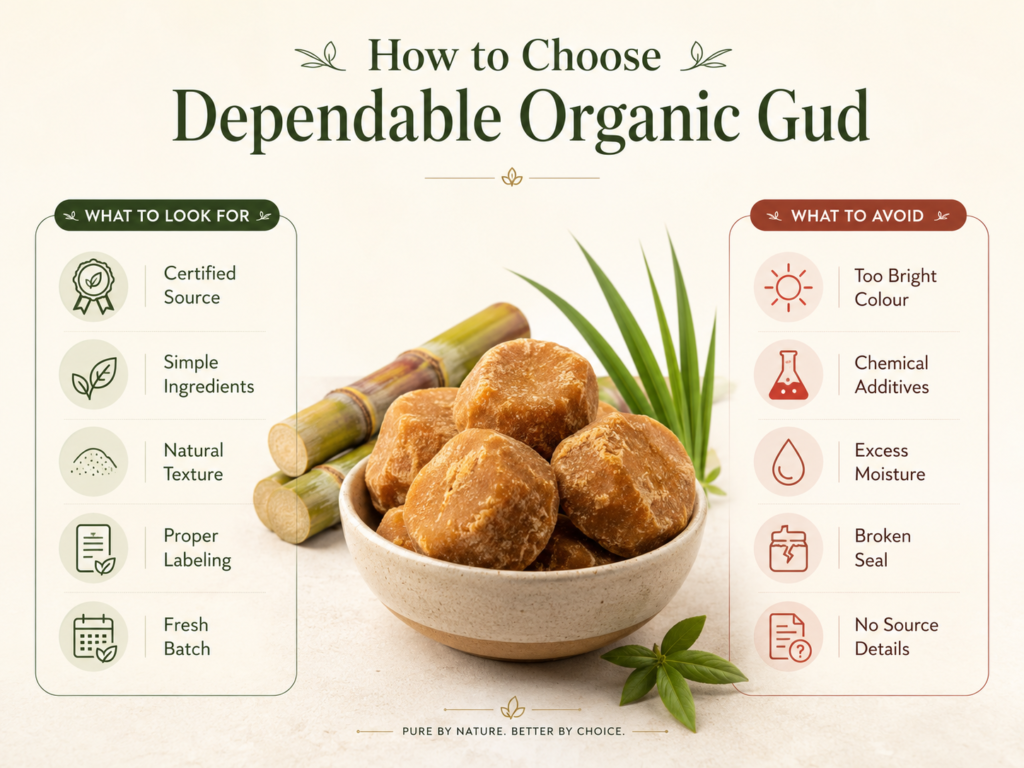
How to Choose Dependable Organic Gud
Check the package for certification information, manufacturer details, batch number, packing date, ingredient list, and storage instructions.
The jaggery should be dry, properly packed, and free from visible dirt, unusual spots, excess moisture, or unpleasant odour.
Choose a brand that explains where its sugarcane comes from and how the product is manufactured. Transparent information is more valuable than broad claims such as chemical free or one hundred percent pure without supporting details.
At Magic Jaggery, customer reviews and repeat purchases help us understand practical concerns related to taste, texture, moisture, packing, and storage. This kind of feedback is useful because product quality must remain consistent after manufacturing, during transport, and after delivery.
Frequently Asked Questions
Is organic jaggery completely chemical free?
Certified organic jaggery is produced under approved organic farming and processing standards. However, responsible brands should avoid absolute claims unless they are supported by testing and certification.
Is organic jaggery healthier than regular jaggery?
It may offer better farming traceability, but both remain sweeteners containing natural sugar. Consumption should remain moderate.
How can I verify certified jaggery?
Check the pack for certification details, the name of the certifying organisation, batch information, and complete manufacturer details.
Does dark colour mean the jaggery is organic?
No. Colour depends on sugarcane variety, boiling conditions, soil, moisture, and storage. It is not reliable proof of organic production.
Can regular jaggery also be good quality?
Yes. Regular jaggery can be hygienic and dependable when made from good sugarcane under controlled production and storage conditions.
Select the fields to be shown. Others will be hidden. Drag and drop to rearrange the order.