Small Cubes, Big Benefits: Why Jaggery Cubes Are Worth Trying
Learn what jaggery cubes are, how they are made, their uses, quality signs, storage tips and how they differ from loose jaggery.
Jaggery cubes are
Table of Conteants
What jaggery cubes are
How they are made
Why people prefer them
Common uses
Quality and storage
Frequently asked questions
What Are Jaggery Cubes?
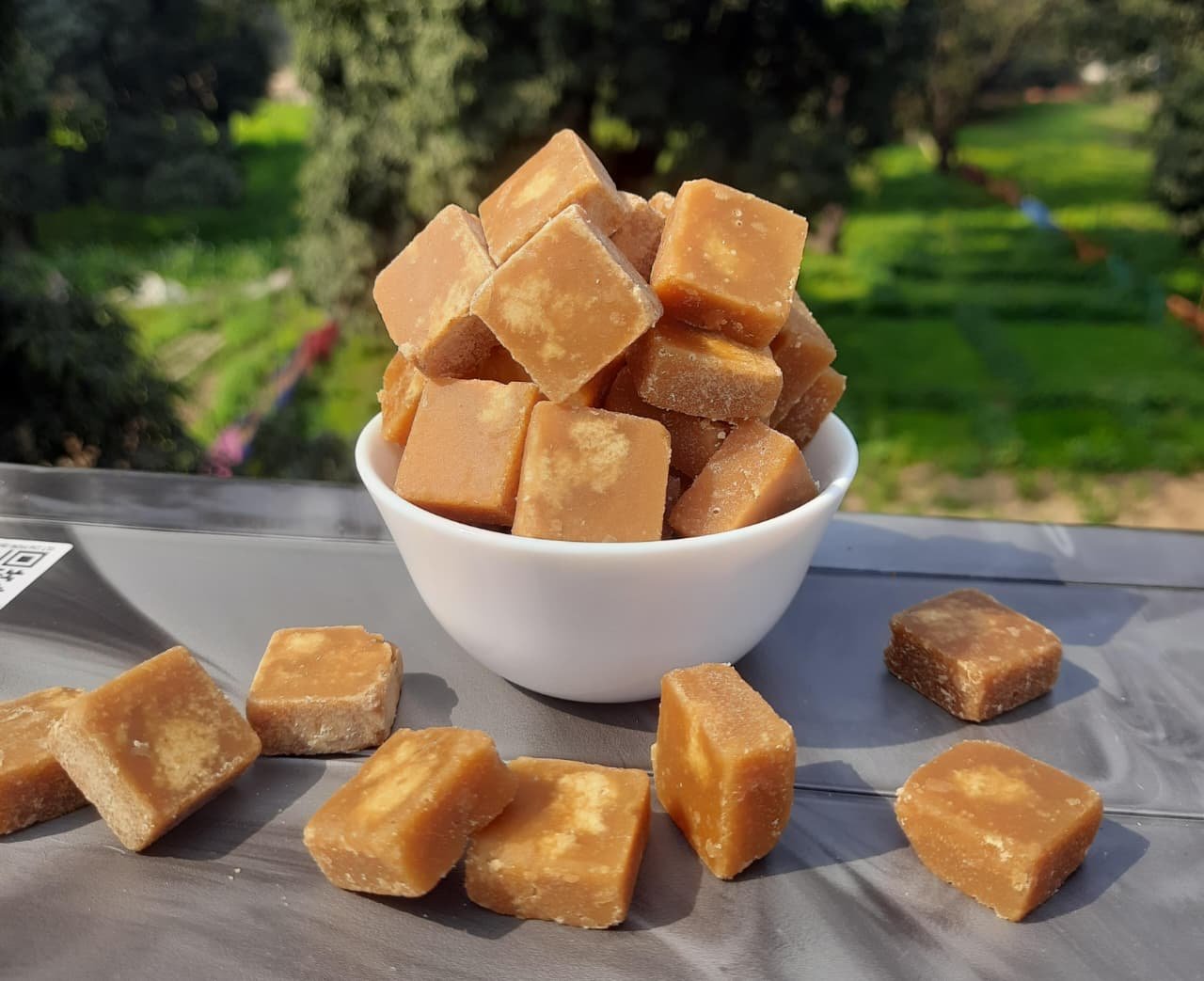
Jaggery cubes are portioned pieces of solid jaggery, usually prepared from sugarcane juice. They may be square, rectangular or slightly uneven depending on the moulding process. Their main purpose is convenience.
The term bite size jaggery is often used for smaller cubes that can be eaten directly or added to a drink.
Jaggery cubes are not candy. Plain cubes should mainly contain jaggery. Some varieties may include fennel, ajwain, dry fruits or spices, so checking the ingredient list is important.
How Jaggery Cubes Are Made
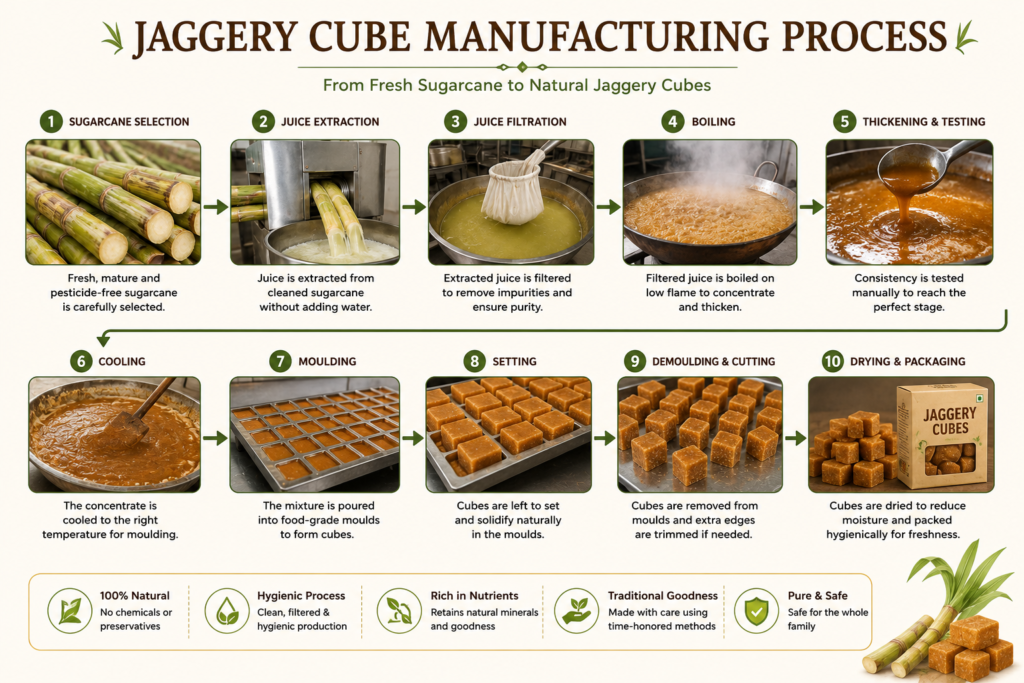
The process begins with mature sugarcane. The cane is cleaned and crushed to extract juice. The juice is then filtered to remove visible impurities. In practice, fresh cane and clean equipment have a noticeable effect on flavour and product consistency.
The filtered juice is heated in a large pan until water evaporates and the liquid thickens. Heat control is important. Undercooking may leave too much moisture, while overcooking can produce a burnt taste and an unusually hard texture.
The thickened syrup is poured into moulds or shaped into small portions. Packing warm jaggery can trap moisture and make the pieces sticky.
Why People Prefer Gur Cubes
Feature
Jaggery Cubes
Jaggery Powder
Jaggery Block
Portion control
Easy
Requires measuring
Requires cutting
Convenience
High
High
Moderate
Best suited for
Tea, serving and direct use
Cooking and mixing
Traditional recipes
Risk of mess
Low
Moderate
Moderate
Storage requirement
Airtight container
Airtight container
Cool and dry storage
Ease of carrying
Easy
May spill
Less convenient
Common Uses of Jaggery Cubes
Tea and Warm Drinks
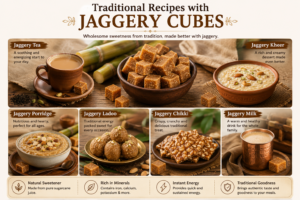
A small cube can sweeten tea, milk or herbal drinks. It is usually better to add jaggery after boiling, especially when milk is present, because certain conditions may cause curdling.
Traditional Recipes
Jaggery cubes can be melted for kheer, halwa, laddoo, chikki and homemade sweets. For recipes that need exact sweetness, weigh the cubes because their sizes may vary.
After Meals
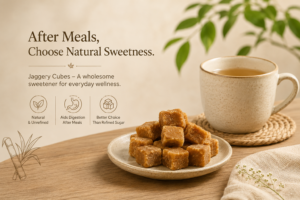
Many Indian households serve a small piece of jaggery after food. Bite size jaggery makes this practice simple because the portion is already prepared.
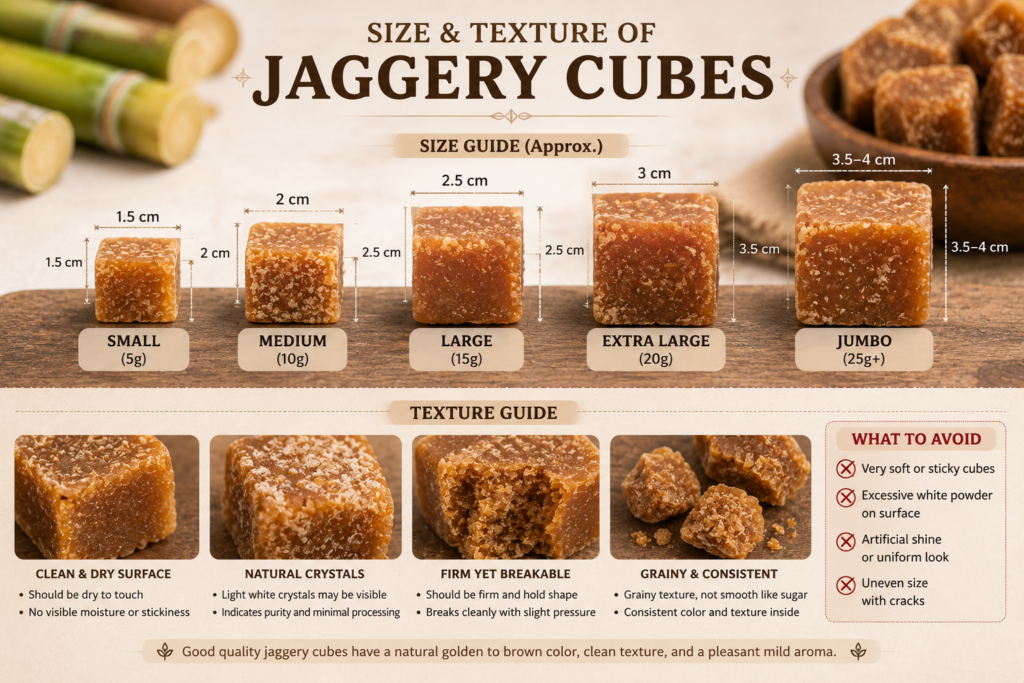
How to Identify Good Quality Jaggery Cubes
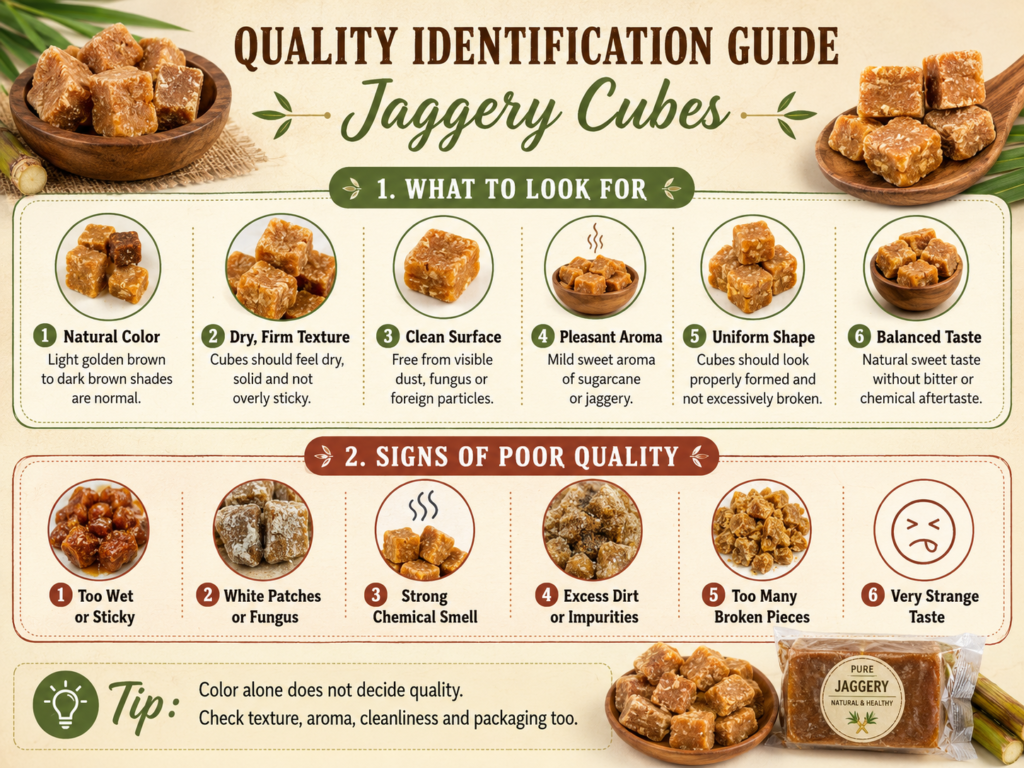
Quality Factor
What to Look For
Warning Sign
Aroma
Mild sugarcane or caramel aroma
Sour or chemical smell
Texture
Firm and reasonably dry
Excessively wet or sticky
Appearance
Natural colour with clean surface
Mould or visible dirt
Taste
Natural sweetness
Burnt or unusual aftertaste
Packaging
Properly sealed and labelled
Torn or unsealed pack
Product details
Batch and manufacturer information
Missing product information
Common Buying and Storage Mistakes
A common mistake is choosing jaggery only because it looks pale. Light colour does not automatically mean better quality.
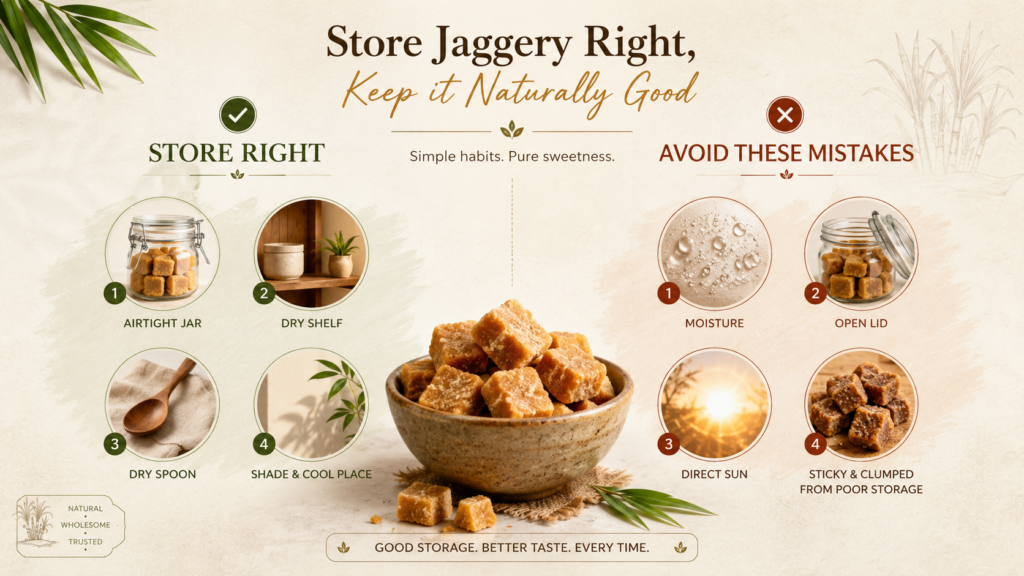
Another mistake is leaving the pouch open. Jaggery absorbs moisture from the air, especially during humid weather. This can make the cubes soft and sticky.
Store gur cubes in a clean, dry and airtight container. Keep them away from steam, sunlight and strong smelling foods. Use dry hands or a dry spoon. Do not consume cubes that develop mould, fermentation or an unusual smell.
Frequently Asked Questions
Are Jaggery Cubes Made From Sugarcane?
Most are made from concentrated sugarcane juice. Some jaggery is made from palm sap, so check the label.
Are Jaggery Cubes the Same as Normal Jaggery?
Yes. The main difference is shape and portion size. Cubes are moulded for easier use.
Can Jaggery Cubes Be Added to Tea?
Yes. Add them after boiling for better control, particularly in milk tea.
How Many Cubes Should Be Used?
The amount depends on cube weight, recipe and preference. Check the weight per cube for more accurate use.
Why Do Jaggery Cubes Become Sticky?
They absorb moisture from the air. Airtight storage and dry handling help prevent this.
Do Darker Cubes Mean Poor Quality?
No. Colour can change naturally with sugarcane variety, season and heating method.
Select the fields to be shown. Others will be hidden. Drag and drop to rearrange the order.