Why Sakkar Is a Smarter Alternative to White Sugar
Learn what sakkar is, how it is made, how it differs from jaggery and sugar, its uses, limitations, quality signs, and storage tips.
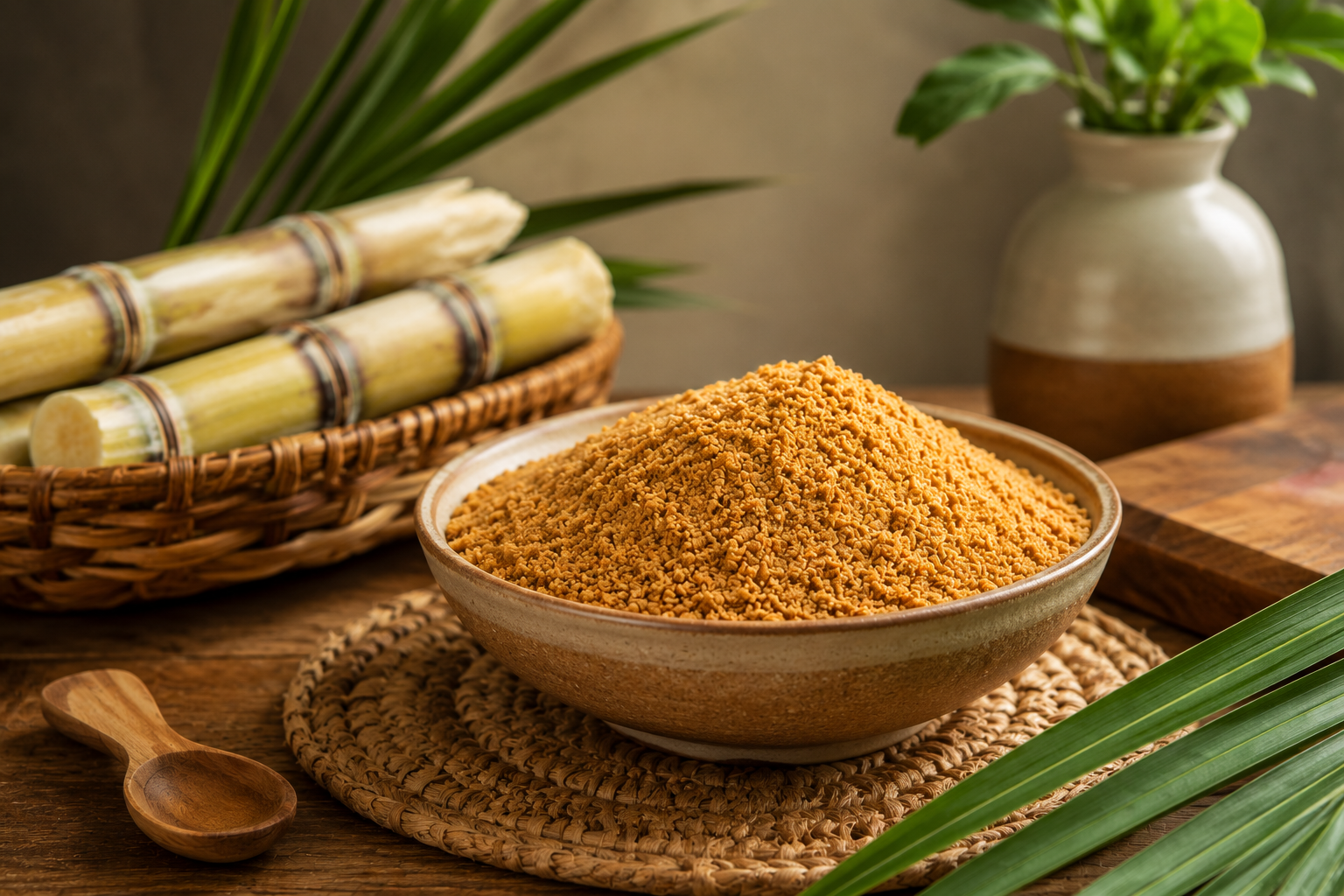
Sakkar is a familiar word in many Indian homes, but it does not always describe one identical product. In everyday speech, it may simply mean sugar. In traditional food markets, however, sakkar often refers to a light brown granulated sugarcane sweetener that is less refined than white sugar.
This naming difference matters. A packet labelled sakkar may resemble khand, khandsari sugar, or powdered jaggery, depending on how it was processed. Buyers should examine the ingredient list, texture, aroma, manufacturer details, instead of relying only on the product name.
Table of Contents
Meaning and production
Comparison with other sweeteners
Advantages and limitations
Quality signs
Uses, storage, and FAQs
What Is Sakkar?
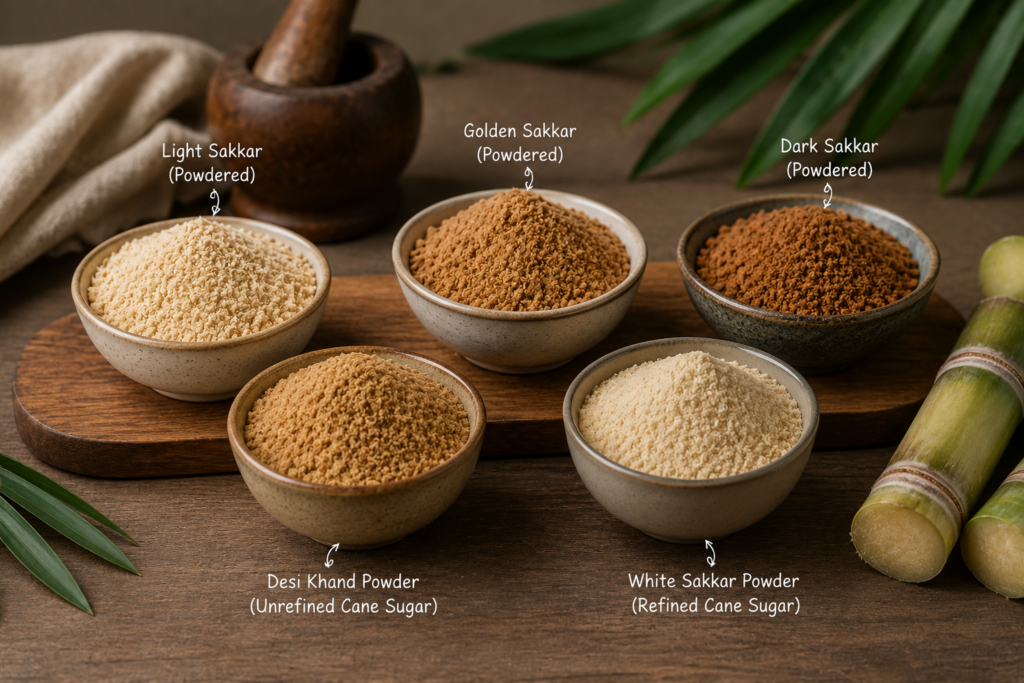
Sakkar is commonly used as a regional name for sugar or a traditional granulated cane sweetener. When sold as a less refined product, it usually has a cream, golden, or light brown colour and a mild sugarcane or caramel flavour.
Sakkar is not always a precise technical category. The Food Safety and Standards Authority of India provides a specific standard for khandsari sugar, describing it as sugar obtained from sugarcane juice through an open pan process. The word sakkar may still be used more broadly by sellers and consumers.
Products carrying the same common name may therefore differ in colour, crystal size, moisture, taste, and refining level.
How Is Sakkar Made?
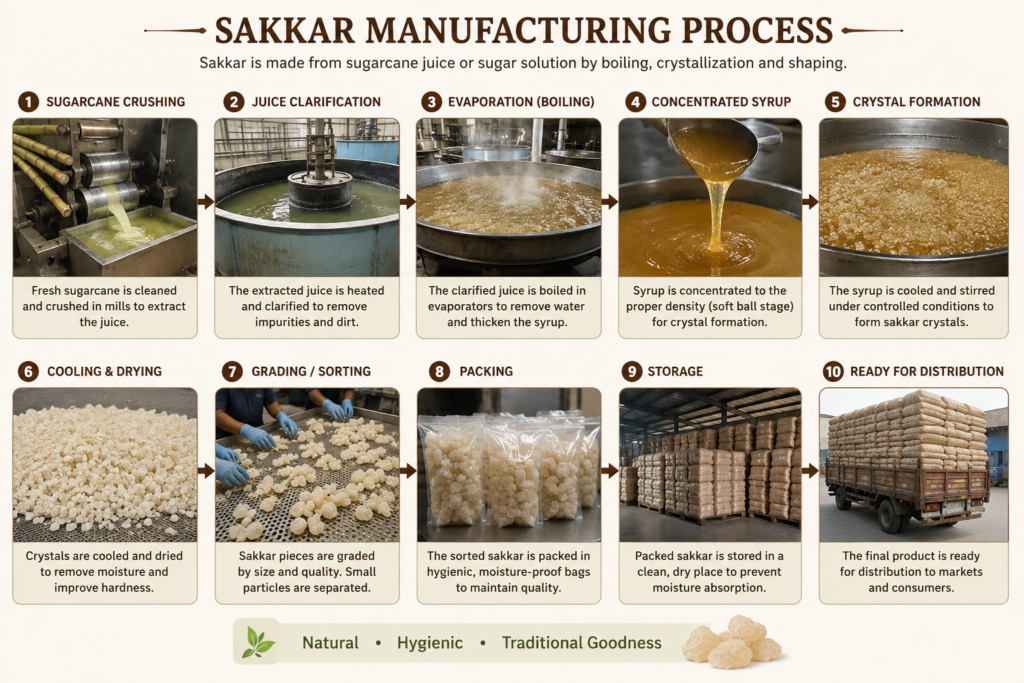
Traditional production begins with mature sugarcane. The cane is cleaned and crushed, and its juice is filtered to remove fibre and plant material.
The juice is heated so that water evaporates. Foam and floating impurities are removed during boiling. Once the syrup reaches the required concentration, controlled cooling and movement encourage granules to form.
The product may then be separated, dried, sieved, inspected, and packed. The exact method depends on whether the manufacturer is producing khandsari style sugar, softer cane sugar, or jaggery based powder.
From our manufacturing experience, texture is influenced by crop maturity, natural sugar level, boiling control, humidity, and drying. Reasonable batch variation does not automatically indicate poor quality.
Is Sakkar the Same as Jaggery Powder and Refined Sugar?
Feature
Sakkar
Jaggery Powder
Refined White Sugar
Main source
Sugarcane juice
Concentrated sugarcane juice
Sugarcane or sugar beet
Common colour
Cream, golden, or light brown
Golden brown to dark brown
White
Texture
Granular or crystalline
Fine or coarse powder
Uniform crystals
Flavour
Mild sugarcane or caramel taste
Stronger jaggery flavour
Neutral sweetness
Molasses character
Depends on processing
Usually more noticeable
Mostly removed
Moisture sensitivity
May form lumps
Often absorbs moisture easily
Usually remains dry longer
Common uses
Tea, milk, sweets, porridge
Halwa, laddoo, drinks, desserts
Baking, beverages, desserts
Consumption advice
Use in moderation
Use in moderation
Use in moderation
Advantages of Sakkar
1. Pleasant Traditional Flavour
Sakkar can provide mild caramel and sugarcane notes without dominating a recipe as strongly as dark jaggery sometimes does.
2. Convenient Granulated Form
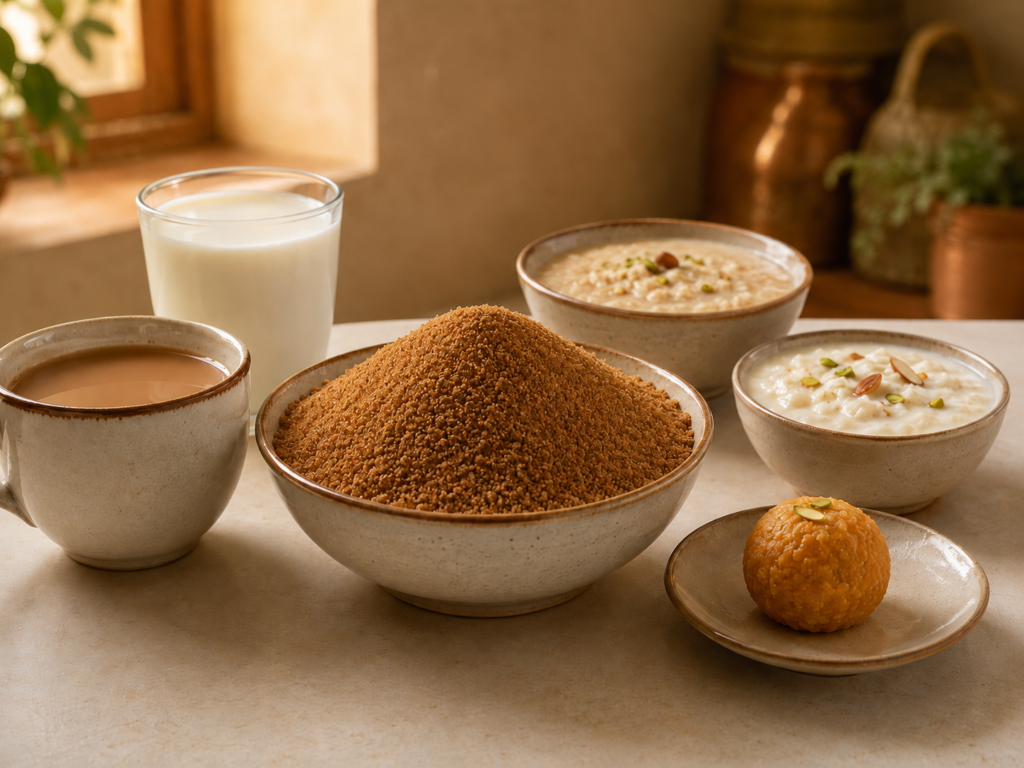
Sakkar powder is easy to measure and mix. It can be used in tea, milk, porridge, kheer, halwa, laddoo, and selected baked foods.
3. Fewer Refining Stages
Some varieties undergo fewer refining stages than white sugar and retain more natural colour and flavour. This is a processing and culinary difference, not permission to consume unlimited quantities.
Limitations of Sakkar
Sakkar is still a concentrated sweetener and contributes sugar and calories. It can affect blood glucose, so people with diabetes or insulin resistance should seek medical guidance before using it regularly.
It may absorb moisture and form lumps. Natural colour variation can confuse buyers who assume the palest product must be the purest.
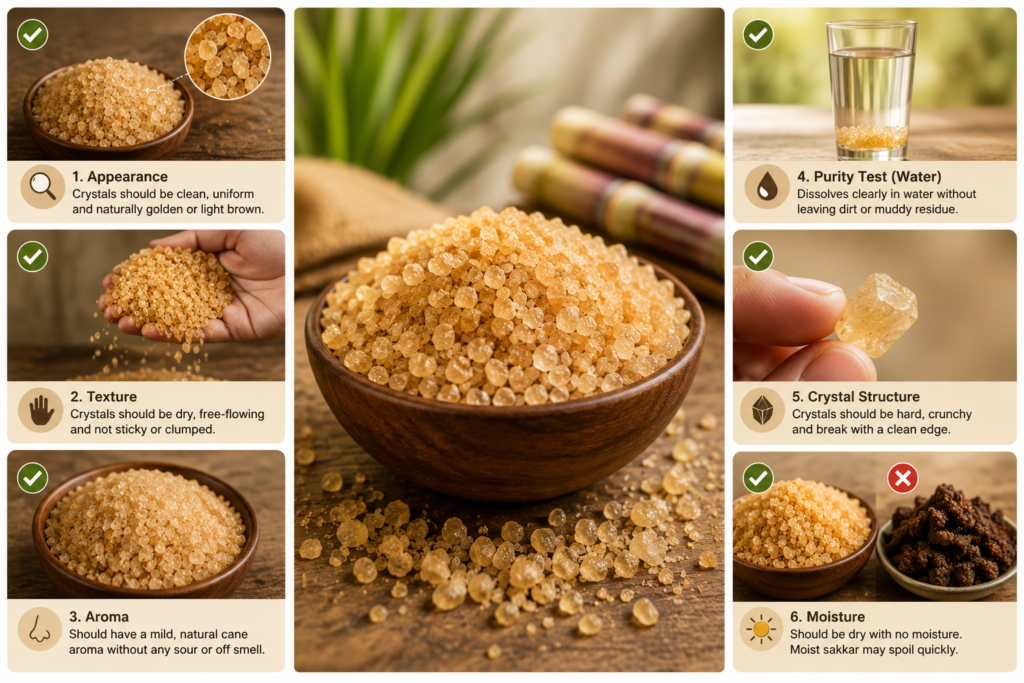
How to Identify Good Quality Sakkar
Quality factor
What to look for
Possible warning sign
Aroma
Clean and mildly sweet
Sour, chemical, or burnt smell
Texture
Dry and reasonably free flowing
Wet or sticky lumps
Cleanliness
Free from visible foreign material
Dirt, insects, or unusual particles
Colour
Natural variation is acceptable
Unusual patches or artificial brightness
Packaging
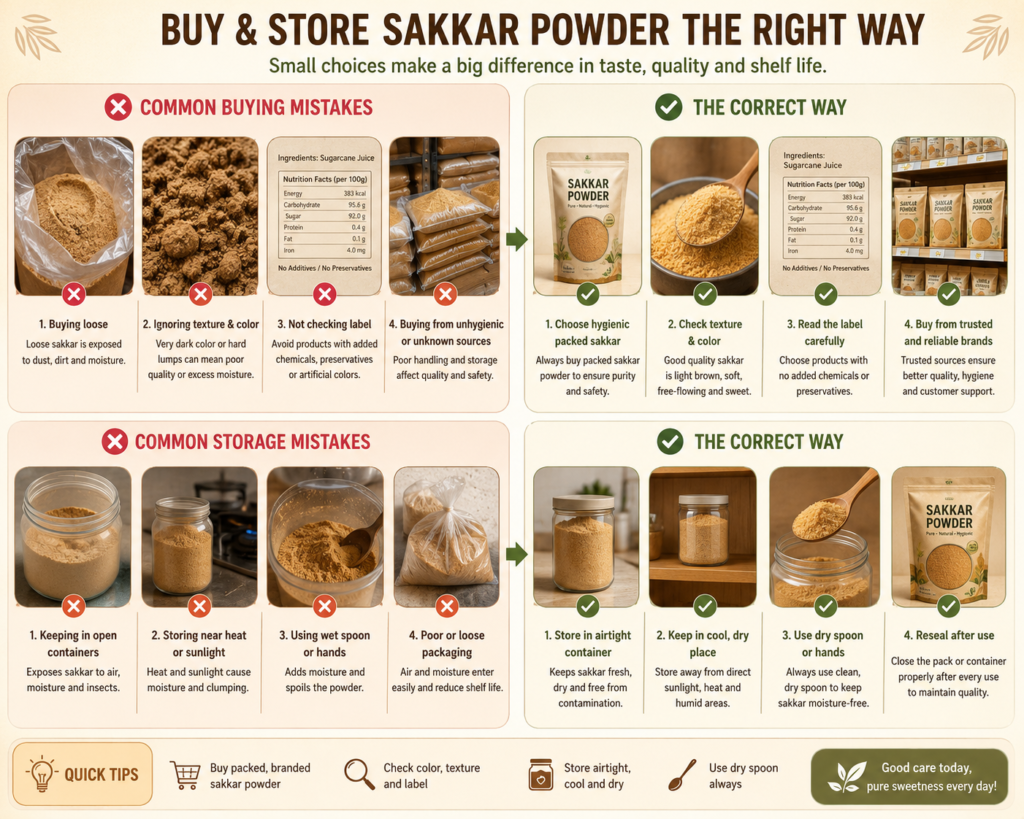
Properly sealed and moisture protected
Torn, open, or weak packaging
Labelling
Complete batch and manufacturer details
Missing dates or licence information
Uses and Storage
Sakkar can sweeten tea, coffee, milk, porridge, traditional drinks, kheer, halwa, and homemade sweets. When replacing white sugar, begin with a smaller amount and adjust after tasting because its flavour and sweetness may differ.
Store it in a clean, dry, airtight container. Use a dry spoon and keep it away from steam, sunlight, moisture, and strong smelling foods.
Frequently Asked Questions
Is Sakkar Healthier Than White Sugar?
It may be less refined and more flavourful, but it remains sugar and should be consumed in moderation.
Is Sakkar the Same as Desi Khand?
The names may overlap in local markets, but the actual product depends on the manufacturing method and label.
Is Sakkar Powder the Same as Jaggery Powder?
No. Jaggery powder generally retains more molasses and usually has a darker colour and stronger taste.
Can Sakkar Be Added to Tea?
Yes. It can add sweetness with a mild sugarcane or caramel note.
Why Does Sakkar Become Lumpy?
Humidity, open packaging, steam, and wet spoons can introduce moisture and cause clumping.
Select the fields to be shown. Others will be hidden. Drag and drop to rearrange the order.