Signs of the Best Jaggery Powder: Color, Texture, and Aroma
Choose the best jaggery powder with these simple quality checks.
Finding the best jaggery powder is not always easy. Many products may look similar on the shelf, yet their quality can vary because of differences in sugarcane quality, processing methods, and storage. A quick glance at the packet rarely tells the full story.
From our experience at Magic Jaggery, where our team has spent more than four years working closely with jaggery production from sugarcane selection to packaging, we have learned that a few simple checks can reveal a lot about quality. These practical observations, along with feedback from more than two lakh customers, have helped us understand what people value most in pure jaggery powder. This guide explains the signs that matter before you make your next purchase.
Table of Contents
Why Quality Matters
Check the Color Carefully
Feel the Texture
Notice the Aroma
Read the Ingredient Label
Packaging and Storage Matter
FAQs
Why Quality Matters
Good jaggery powder is more than a sweetener. It reflects careful sugarcane selection, proper boiling, hygienic handling, and suitable storage. Poor processing or excess moisture can affect taste, shelf life, and consistency.
Although appearance alone cannot confirm purity, combining visual inspection with aroma, texture, and ingredient information gives a much better idea of product quality.
Best Jaggery Powder: Check the Color Carefully
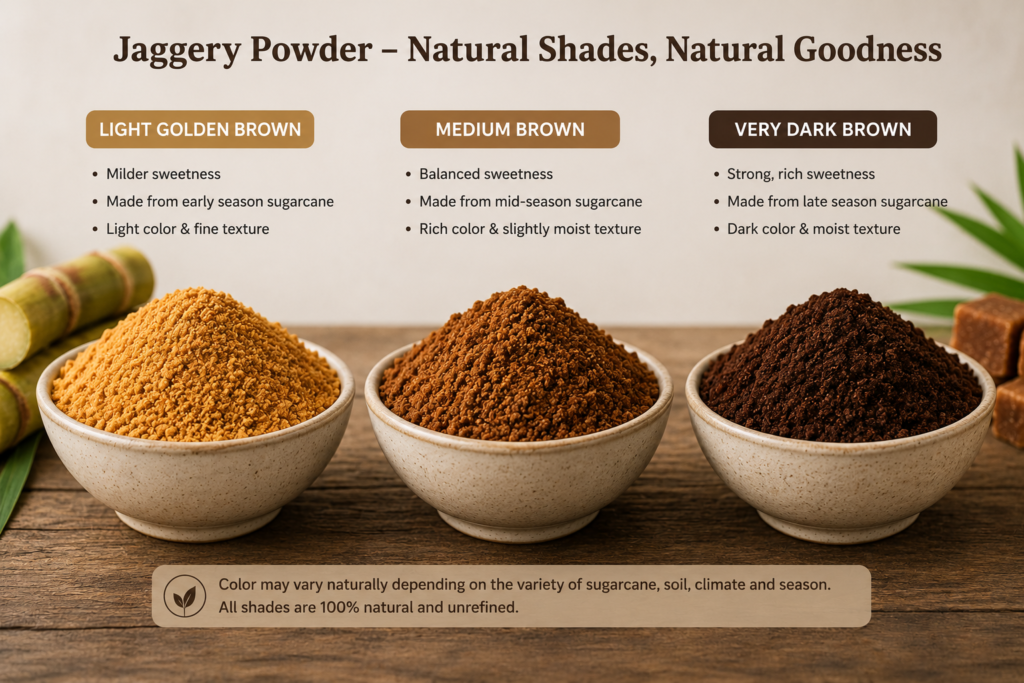
Color is usually the first thing people notice. However, darker or lighter does not automatically mean better.
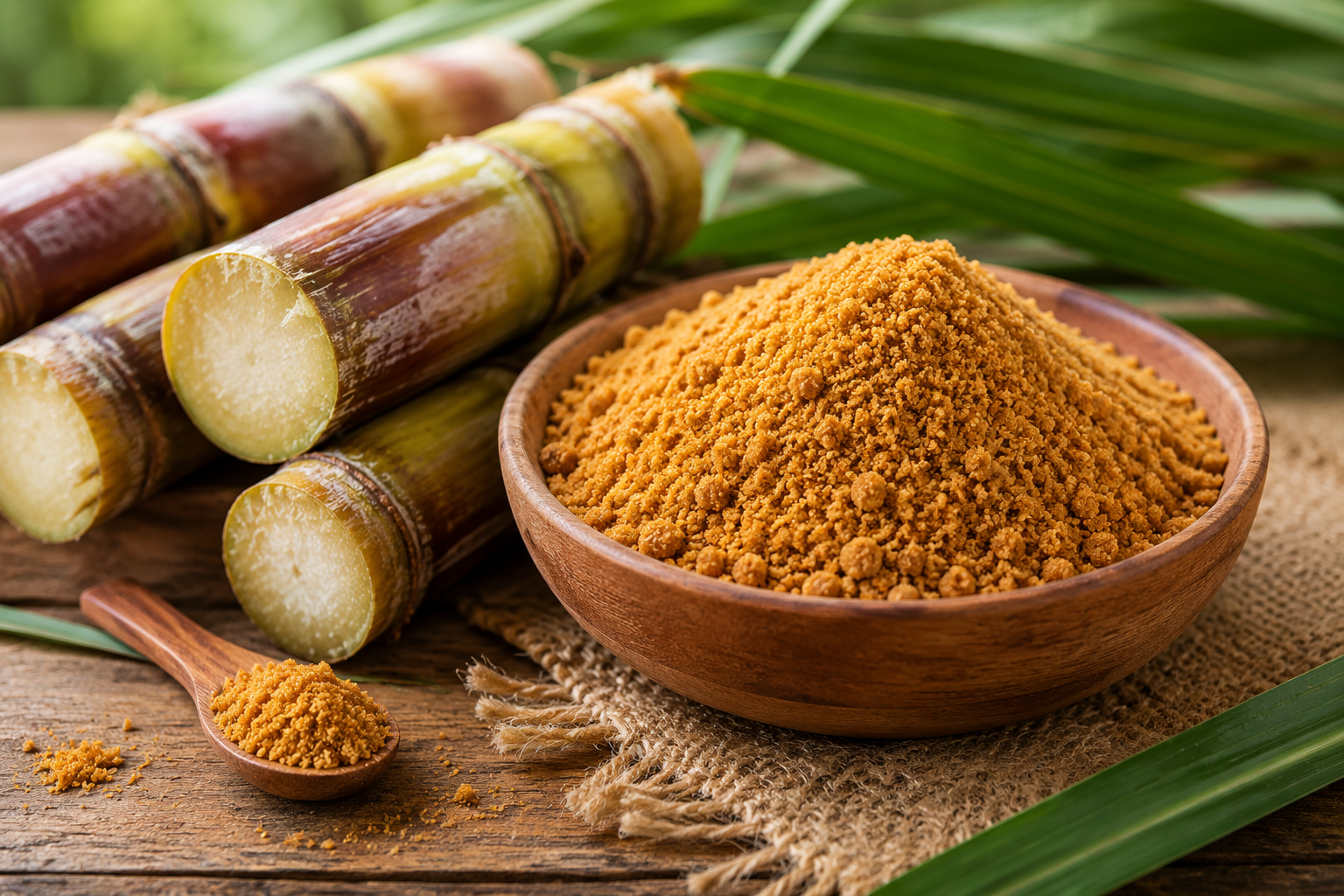
A good quality jaggery powder generally has a natural golden brown to medium brown shade. The natural color of jaggery is determined by several factors, including the sugarcane variety, soil conditions, harvesting season, and traditional production methods.
Very bright yellow powder may indicate additional processing or clarification. On the other hand, extremely dark powder may result from overheating during preparation.
For example, two batches made from different sugarcane farms can naturally have slightly different shades while maintaining excellent quality. This is completely normal.
The goal is to look for a consistent natural color instead of an unusually bright appearance.
Feel the Texture Before Buying
Texture provides another useful quality clue.
The best jaggery powder should feel free flowing with fine, even granules. Small soft lumps may develop naturally because jaggery absorbs moisture from the air, especially during humid weather. These lumps usually break apart easily and do not necessarily indicate poor quality.
Avoid products that feel excessively sticky, damp, or contain large hardened blocks. These characteristics commonly indicate improper storage conditions or moisture exposure, which may affect the product’s quality.
A well processed pure jaggery powder should mix smoothly into tea, coffee, milk, porridge, and traditional desserts without leaving large undissolved pieces.
Texture
What It Indicates
Fine and loose
Fresh and well processed
Small soft lumps
Normal moisture absorption
Sticky texture
Excess moisture exposure
Large hard lumps
Poor storage conditions
Notice the Aroma
Aroma is often overlooked, yet experienced buyers rely on it.
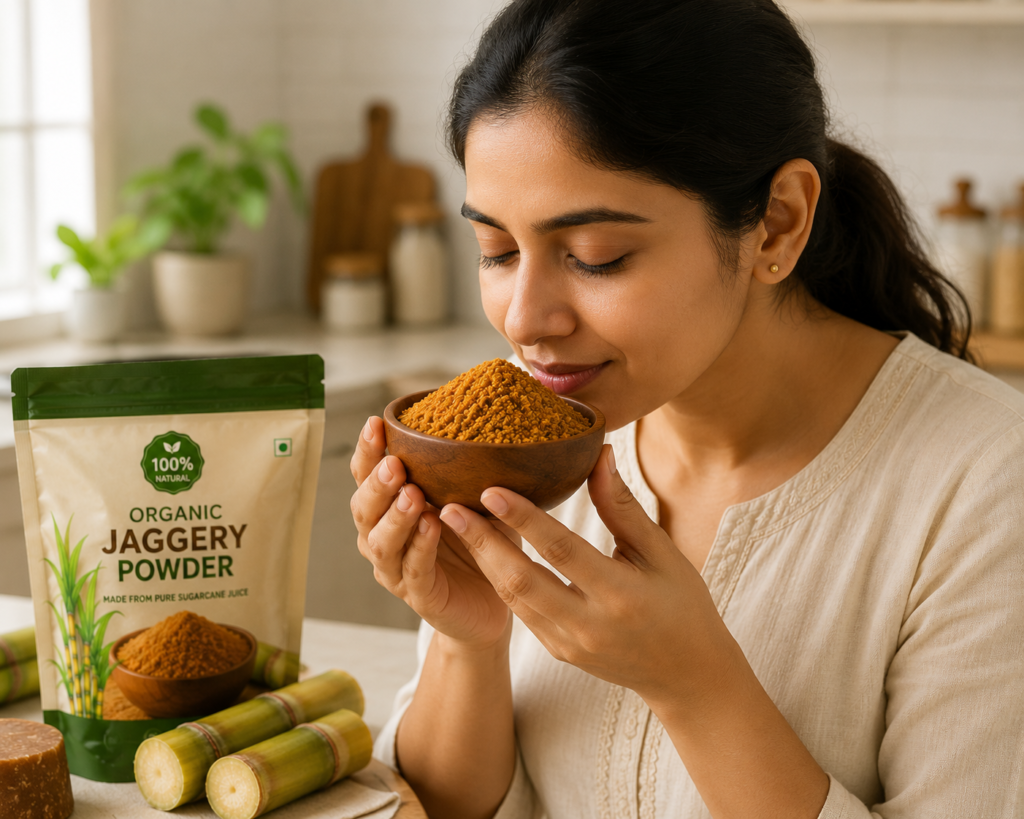
Fresh jaggery powder has a pleasant sugarcane fragrance with mild caramel notes created during the boiling process. The smell should feel natural rather than overpowering.
If the jaggery powder has a sour, stale, or musty smell, it may have been exposed to moisture or stored under unsuitable conditions, which can affect its quality.
During quality evaluation in production, aroma is one of the first sensory checks because it quickly reflects freshness and handling practices.
Read the Ingredient Label
One of the easiest quality checks happens before opening the packet.
Look for a simple ingredient list that mentions only jaggery or sugarcane jaggery. A clear manufacturing date, batch number, and food safety information also indicate better manufacturing practices.
Reputable manufacturers usually provide transparent labeling because they want customers to understand exactly what they are purchasing.
If important product information is missing, buyers should be more cautious.
Packaging and Storage Matter
Even excellent jaggery powder can lose quality if it is packed or stored poorly.
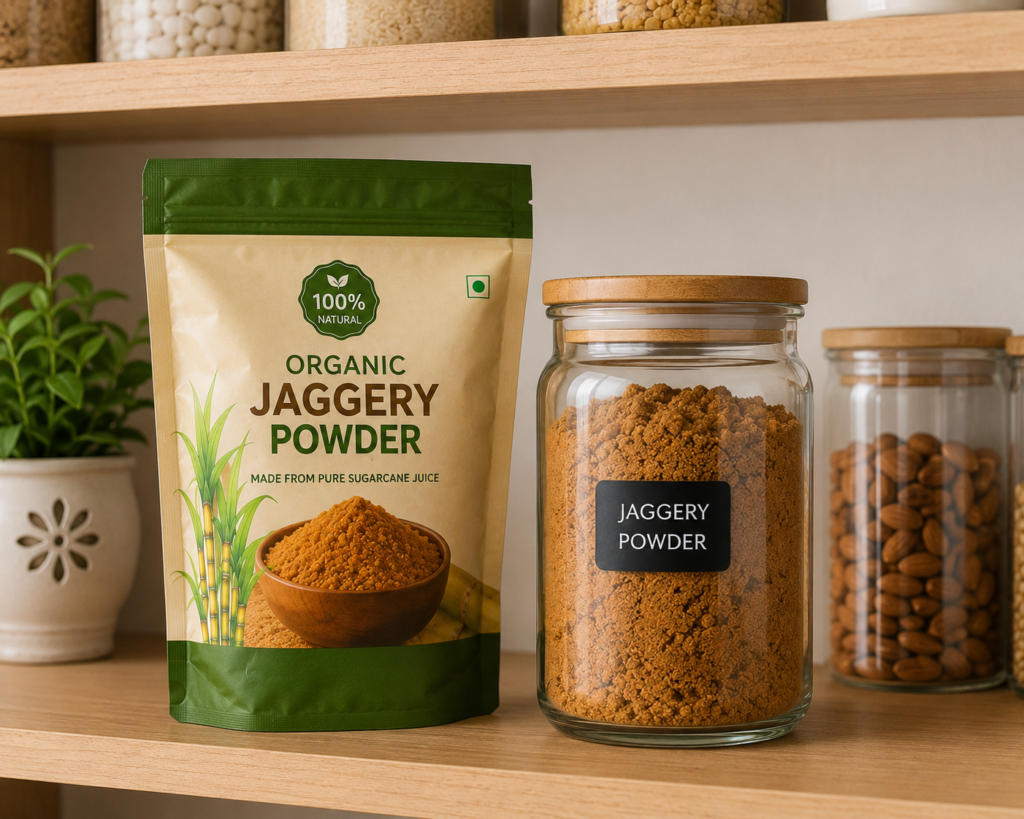
Choose products packed in properly sealed, food grade packaging that protects against moisture. After opening, transfer the powder into an airtight container and keep it in a cool, dry place away from direct sunlight.
We have seen customers report better freshness simply by storing jaggery correctly after opening. Proper storage also helps maintain texture and aroma for a longer period.
Frequently Asked Questions
How can I identify the best jaggery powder?
Check its natural color, fine texture, fresh aroma, simple ingredient list, and secure packaging instead of relying on appearance alone.
Does darker jaggery powder mean higher quality?
No. Natural color varies depending on sugarcane variety and traditional processing methods. Color alone cannot determine quality.
Why does pure jaggery powder develop small lumps?
Jaggery naturally absorbs moisture from the air. Small soft lumps are common and usually do not affect quality if the product has been stored properly.
Should pure jaggery powder have a strong smell?
No. It should have a mild sugarcane aroma with gentle caramel notes. Sour or musty smells may indicate poor storage.
How should jaggery powder be stored?
To preserve its quality and extend its shelf life, store it in an airtight container in a cool, dry place away from moisture and direct sunlight.
Select the fields to be shown. Others will be hidden. Drag and drop to rearrange the order.