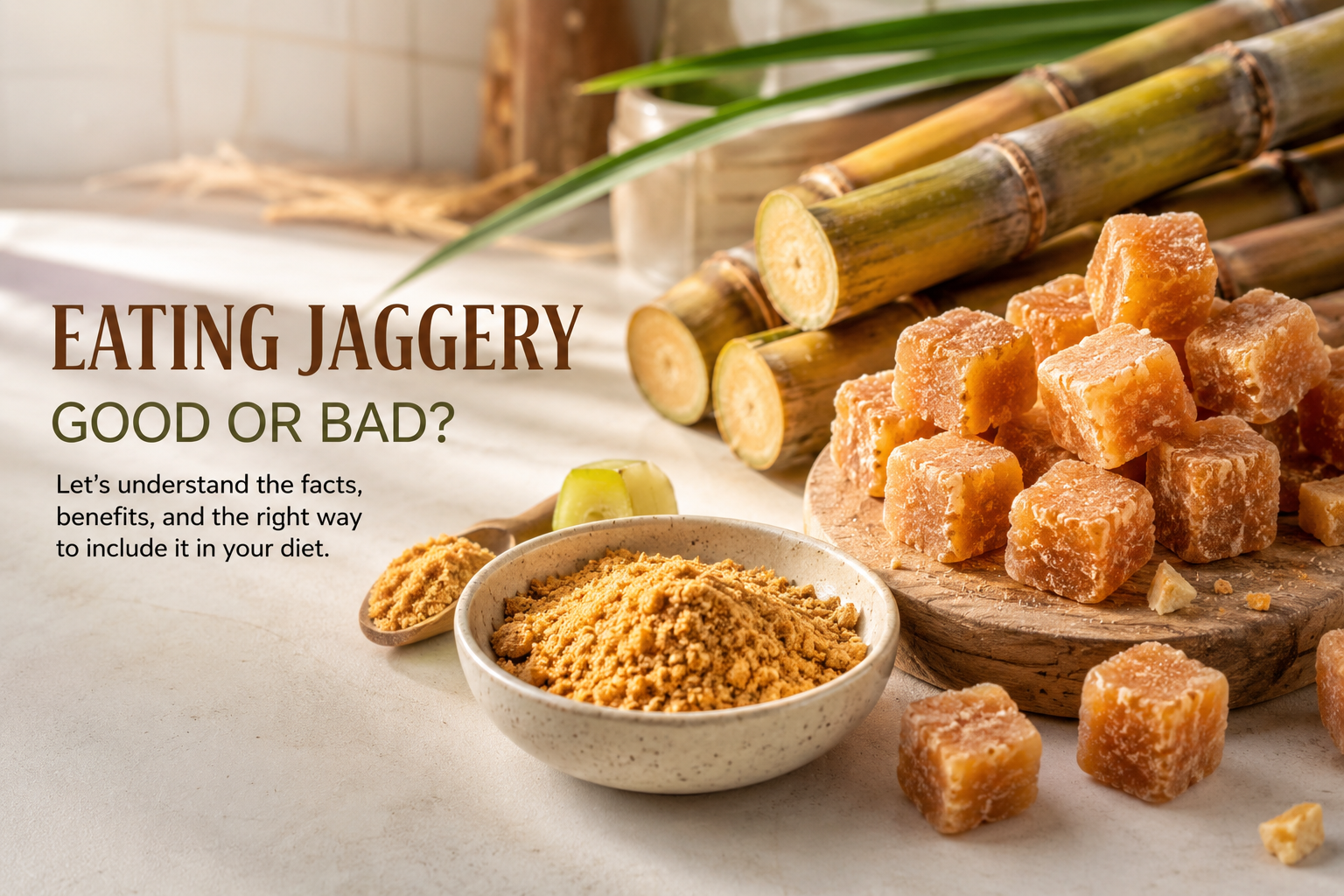
Understand the facts before making eating jaggery a daily habit.
Eating jaggery is often presented as a simple way to make your diet healthier. Some people replace refined sugar with jaggery and assume they can eat it freely. Others avoid jaggery because they believe its dark colour means poor quality or that it is just another form of sugar.
The truth is more balanced.
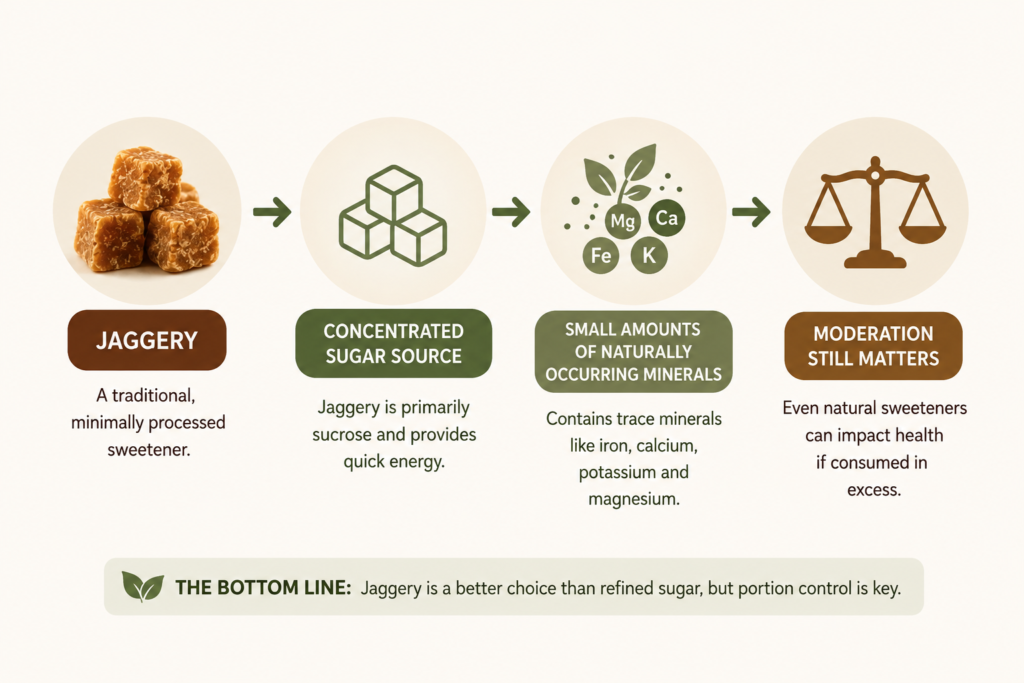
Jaggery is made mainly from concentrated sugarcane juice, so it still contains a significant amount of sugar. Unlike refined white sugar, jaggery is less processed and may contain trace amounts of naturally occurring minerals. What matters is understanding what jaggery can realistically offer and where common claims go too far.
At Magic Jaggery, our experience across sugarcane selection, juice processing, boiling, packaging and distribution has taught us that quality and quantity both matter. With more than 2 lakh customers, we have also seen how easily consumers can misunderstand jaggery simply because of its colour, texture or traditional reputation.
Table of Contents
Is jaggery healthier than sugar?
Common myths about eating jaggery
Real benefits of eating jaggery
How much jaggery should you eat?
How to identify good quality jaggery
Is Eating Jaggery Healthier Than Sugar?
Jaggery can be a better choice in some situations, but calling it a healthy food without qualification would be misleading.
Refined sugar is primarily sucrose. Jaggery also contains mostly sugar, but because it undergoes less refining, it can retain small quantities of minerals and other components from sugarcane juice.
The important point is that these nutritional differences do not make jaggery calorie free or suitable for unlimited consumption.
Factor
Jaggery
Refined Sugar
Main source
Sugarcane juice
Sugarcane or sugar beet
Main sugar
Mostly sucrose
Mostly sucrose
Processing
Less refined
Highly refined
Natural minerals
Small amounts may remain
Very little
Calories
Still calorie dense
Calorie dense
Best approach
Use in moderation
Use in moderation
Common Myths About Eating Jaggery
Myth 1: Jaggery does not contain sugar
This is one of the biggest misconceptions.
Jaggery naturally contains a high proportion of sugars. The fact that it comes from sugarcane and is traditionally prepared does not remove its sugar content.
Fact: Jaggery should still be consumed in moderation, particularly by people who need to manage their overall sugar intake.
Myth 2: Darker jaggery is always better
Colour alone cannot tell you whether jaggery is high quality.
Depending on sugarcane variety, processing conditions, juice characteristics and concentration, jaggery can range from golden brown to considerably darker shades.
Fact: When assessing product quality, consider factors such as cleanliness, aroma, texture, moisture, packaging, and transparent manufacturing practices rather than judging it by color alone.
Myth 3: Jaggery removes toxins from the body
Jaggery is sometimes promoted as a natural detox food. There is no good reason to treat this as an established health fact.
Your liver, kidneys and other biological systems already handle waste removal.
Fact: Jaggery can be part of a traditional diet, but it should not be considered a detox treatment.
Myth 4: You can eat unlimited jaggery because it is natural
Natural does not automatically mean unlimited.
Honey, dried fruit and jaggery are also natural foods, yet their concentrated sugars still matter.
Fact: When consuming jaggery regularly, paying attention to portion size is an important part of maintaining a balanced diet.
Common Myth
The Fact
Jaggery contains no sugar
Jaggery naturally contains a high proportion of sugars
Darker jaggery is always better
Colour alone does not determine quality
Jaggery detoxes the body
Detox claims should not be treated as established health benefits
Natural jaggery can be eaten freely
Portion size still matters
Real Benefits of Eating Jaggery
There are some genuine reasons people choose jaggery.
First, it can provide sweetness with less processing than refined sugar. Depending on the product and processing method, jaggery may also contain small amounts of minerals such as iron, calcium and potassium.
Second, jaggery has a distinctive caramel like flavour. This means you may need less of it to achieve the taste you want in certain foods and drinks.
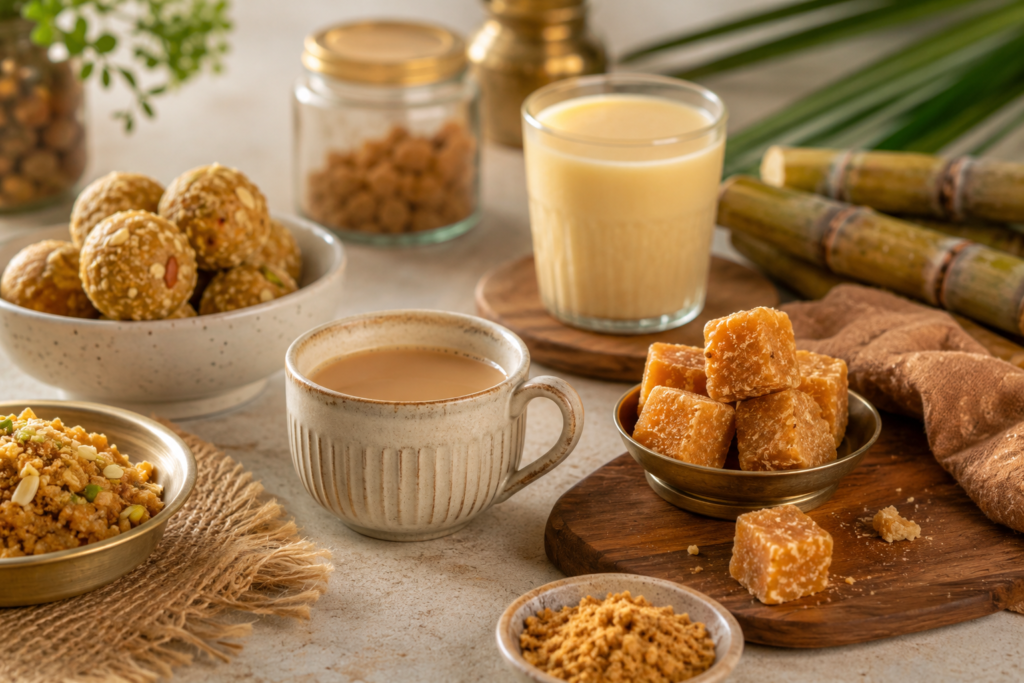
Third, jaggery is useful in traditional recipes such as laddus, chikki, sauces, beverages and regional sweets.
However, these benefits should be viewed in context. Jaggery is not a substitute for vegetables, fruits, pulses, whole grains or other nutrient rich foods.
How Much Jaggery Should You Eat?
There is no single jaggery serving that is appropriate for everyone.
A practical approach is to treat jaggery as a sweetener rather than as a health supplement. If you already consume sweets, sweetened beverages or other sources of added sugar, adding jaggery on top of them increases your overall intake.
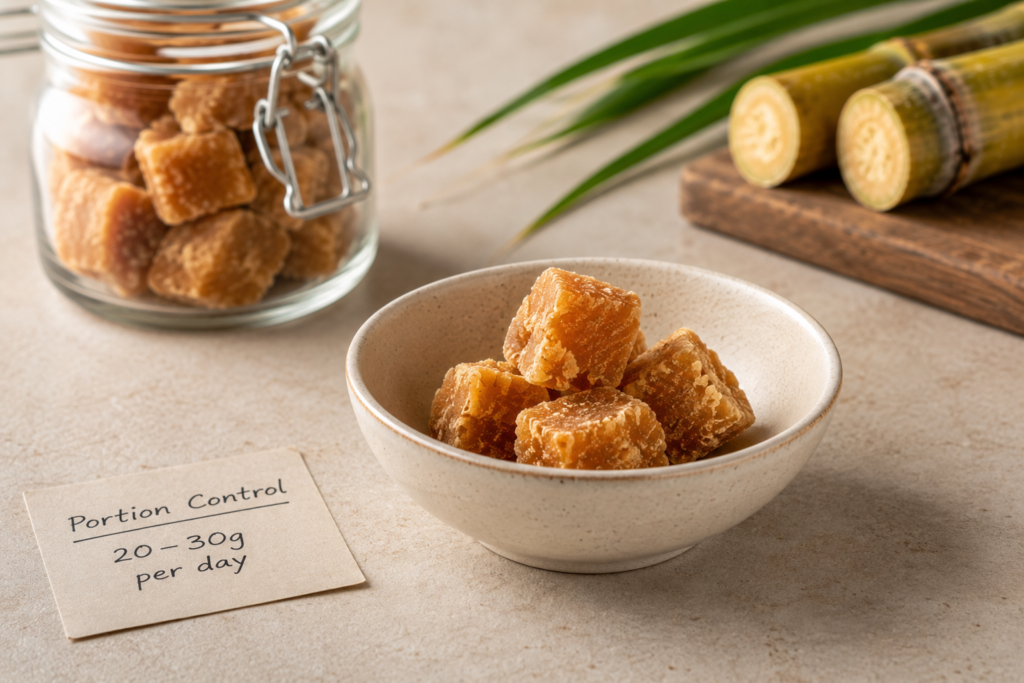
For everyday use, a small portion is more sensible than repeatedly eating jaggery throughout the day.
One common mistake we notice is keeping jaggery within easy reach and eating small pieces several times without considering the total amount consumed. A measured portion is much easier to manage.
How to Identify Good Quality Jaggery
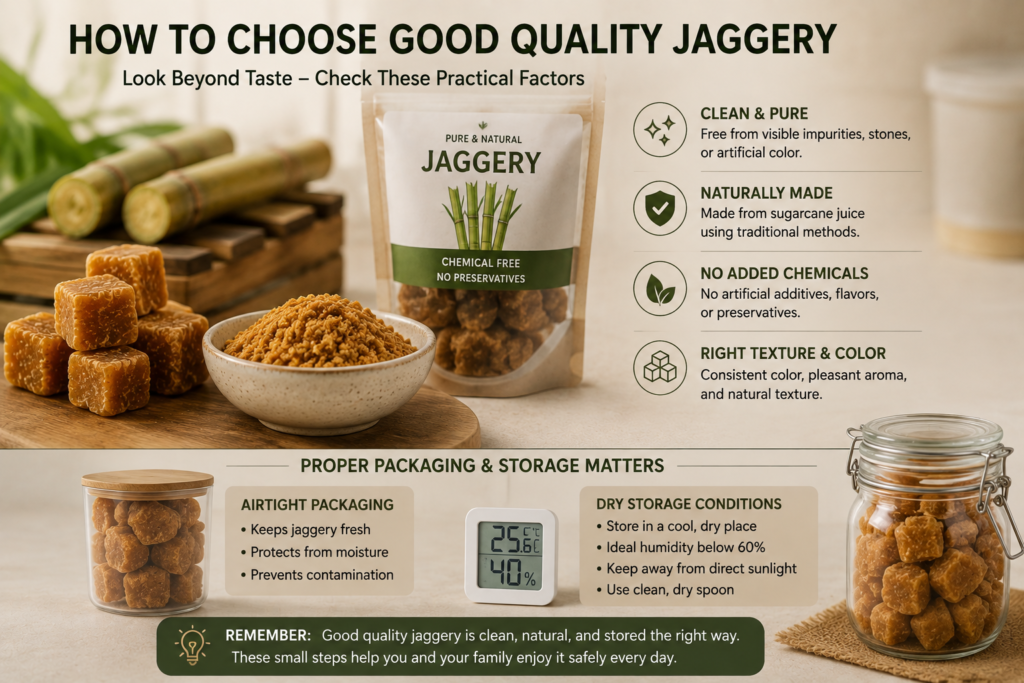
Good jaggery should be clean, properly packed and free from visible dirt or unusual foreign material. It should have a pleasant sugarcane or caramel like aroma rather than an unpleasant chemical or burnt smell.
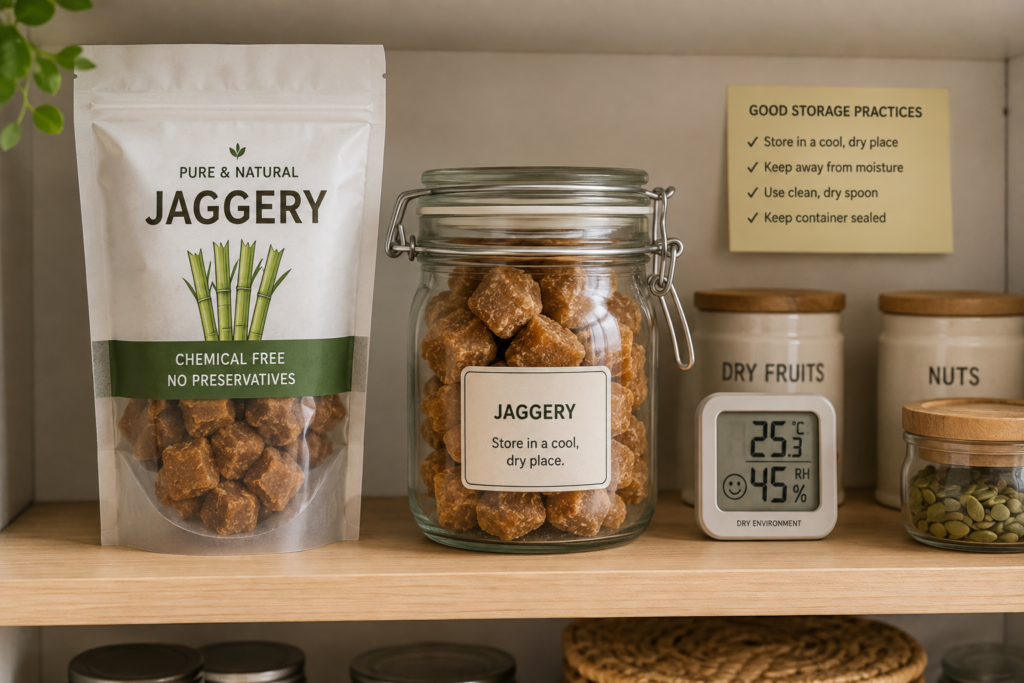
Packaging also matters. Jaggery can absorb moisture from its surroundings, which may affect texture and shelf life.
From a manufacturing perspective, hygiene during juice handling, filtration, boiling, cooling and packing is just as important as the final appearance of the product.
Consumers should therefore consider the source, packaging, ingredients, storage instructions and overall manufacturing transparency rather than relying on colour alone.
Eating jaggery can be part of a sensible diet, but it should not be surrounded by exaggerated health claims. Jaggery is a traditional, minimally refined sweetener with its own flavour and some naturally occurring minerals, yet it remains a concentrated source of sugar.
The smartest approach is simple: choose clean and properly processed jaggery, store it correctly and pay attention to portion size. Understanding what you are actually eating is more useful than believing that every natural food is automatically healthy.
Select the fields to be shown. Others will be hidden. Drag and drop to rearrange the order.