Is Jaggery Good for Health or Is Sugar a Better Choice?
Find out if jaggery is good for health and how it compares to sugar.
“Is jaggery good for health?” is a question many people ask when looking for natural alternatives to refined sugar. Many people replace white sugar with jaggery assuming that it is automatically a healthier choice. The reality is a little more balanced.
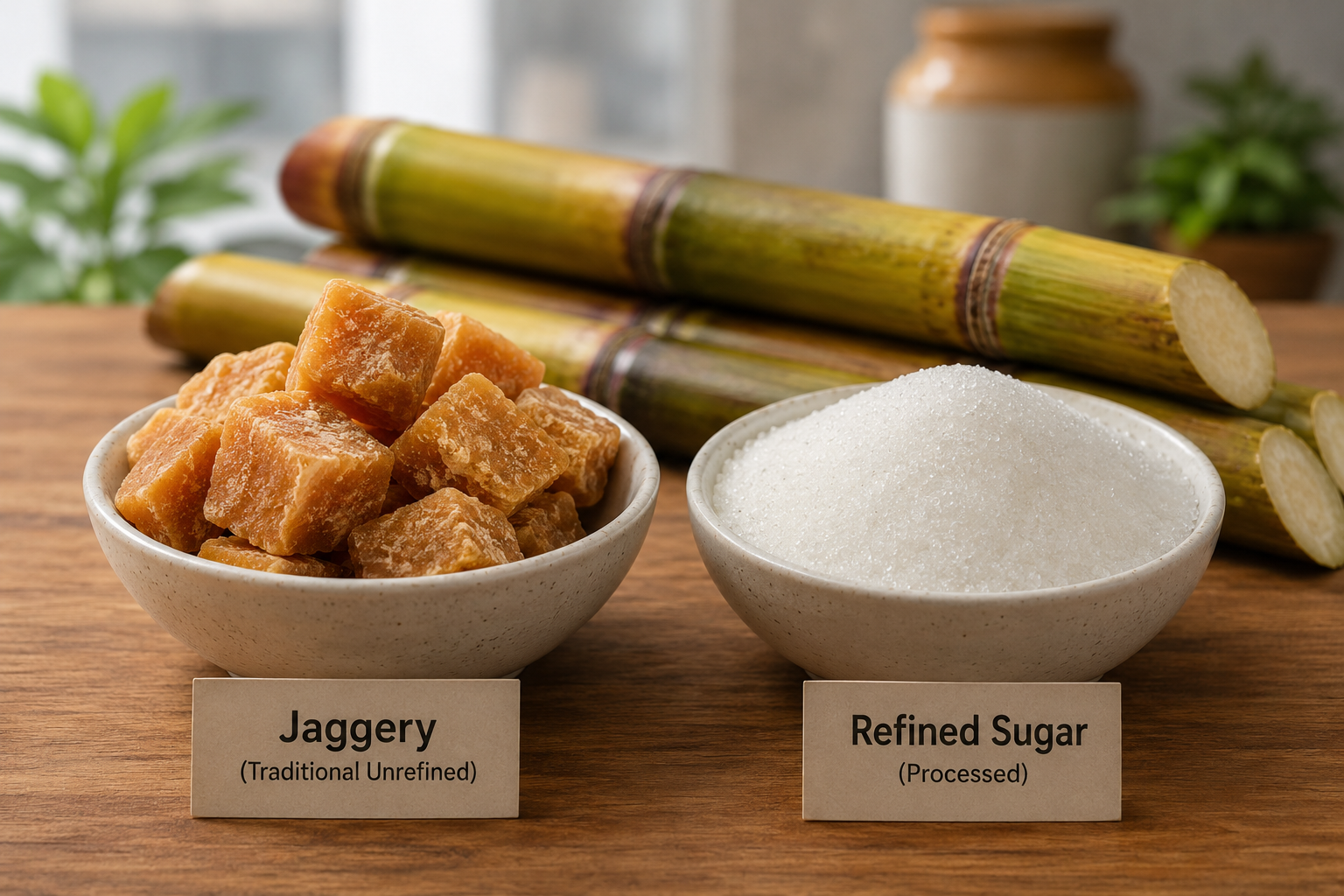
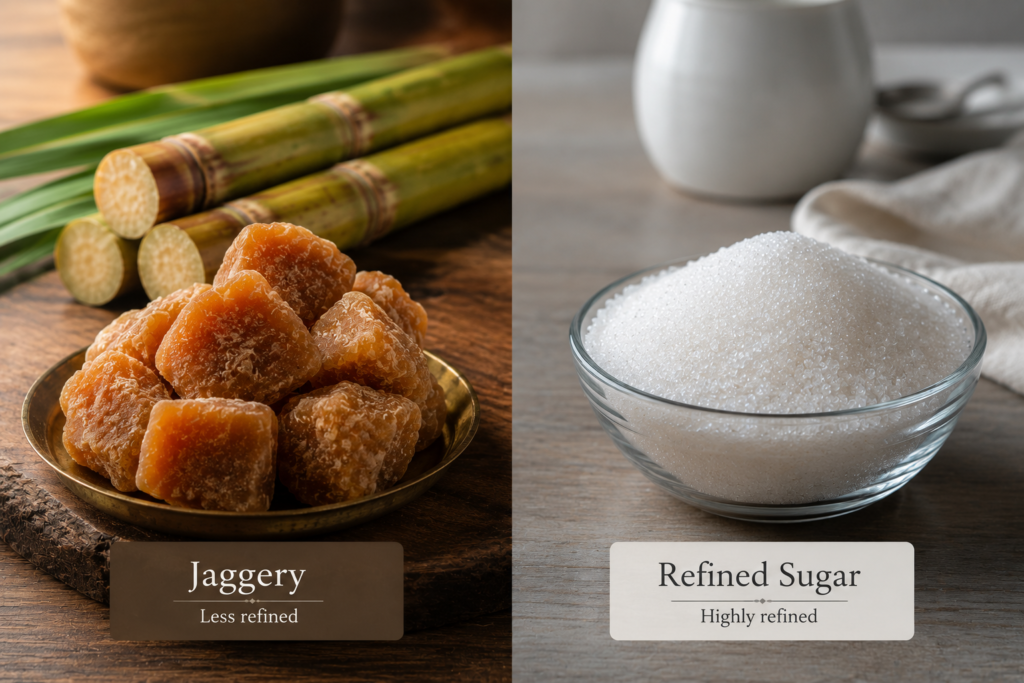
Jaggery is less refined than white sugar and naturally retains small amounts of minerals and other compounds from sugarcane juice. Although jaggery is a natural alternative to refined sugar, it is still a concentrated source of sugars and calories, making portion control important. So, calling jaggery a health food would be misleading.
After years of working closely with sugarcane, jaggery processing, quality evaluation, packaging, and distribution, we have found that the better question is not simply whether jaggery is healthy. Rather than focusing only on whether jaggery is healthy, it is more important to understand how it can be included in a balanced diet.
Table of Contents
Is jaggery good for health?
Jaggery vs sugar
Potential jaggery health benefits
When jaggery may not be the better choice
How much jaggery should you eat?
Common mistakes people make
Is Jaggery Good for Health?
Jaggery can be a reasonable alternative to refined sugar, particularly when you prefer a less processed sweetener. Traditional jaggery is generally made by extracting sugarcane juice, filtering it, concentrating it through controlled heating, and allowing it to solidify.
Unlike refined white sugar, jaggery does not undergo the same level of purification. Research reviews report that jaggery can retain minerals such as iron, calcium, potassium, and magnesium.
However, these nutrients do not make jaggery a free pass to eat unlimited amounts.
Jaggery still contains substantial quantities of sugar. Therefore, portion size matters just as much as the type of sweetener you choose.
Jaggery vs Sugar: What Is the Difference?
The biggest difference is processing.
Factor
Jaggery
Refined Sugar
Processing
Less refined
Highly refined
Main sugars
Sucrose and other sugars
Primarily sucrose
Minerals
Small amounts may remain
Very little
Taste
Rich and caramel like
Clean and sweet
Calories
High
High
Typical use
Traditional foods and drinks
Baking, beverages and cooking
Refined sugar is primarily sucrose, while jaggery contains sucrose along with varying amounts of reducing sugars, moisture, and minerals. Studies of non centrifugal sugar show that its nutritional composition can vary depending on processing and form.
This is an important industry point. Not every jaggery product has the same composition. Processing conditions, sugarcane quality, clarification practices, moisture, and storage can all affect the final product.
Potential Jaggery Health Benefits
1. It Provides Small Amounts of Minerals
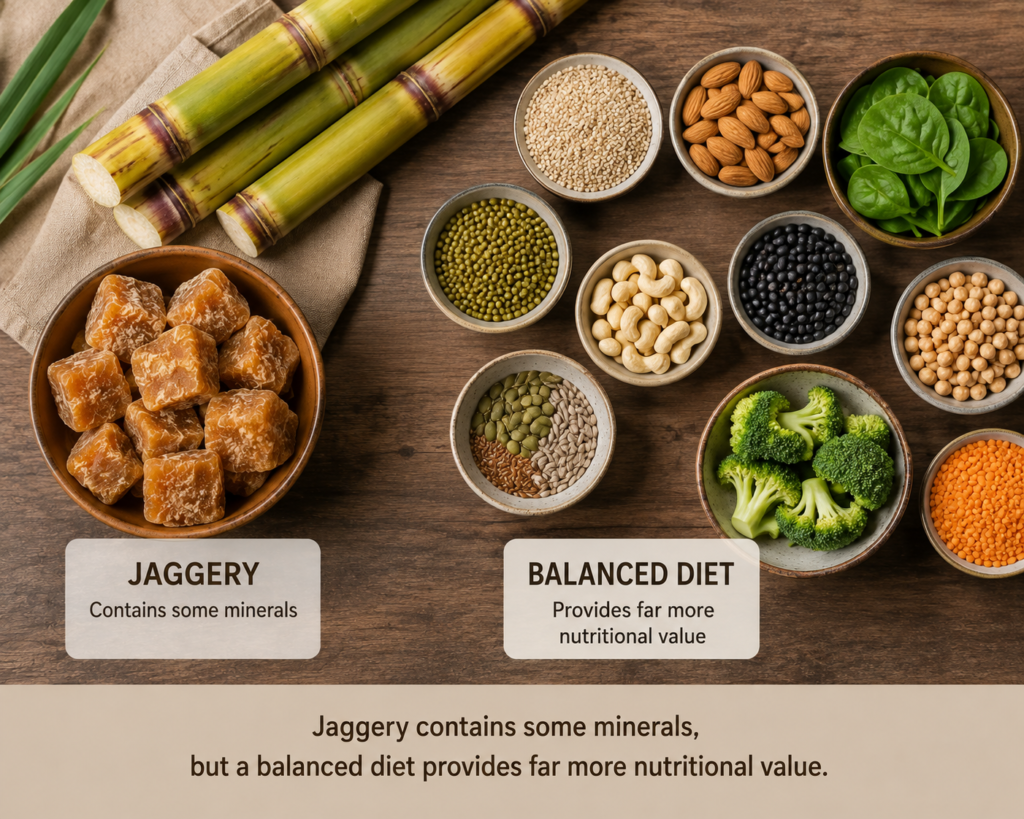
One of the main nutritional differences between jaggery and refined sugar is the presence of minerals. Jaggery can contain iron, calcium, potassium, magnesium, and phosphorus in varying amounts.
That said, jaggery should not be treated as a primary source of these nutrients. A balanced diet containing vegetables, pulses, fruits, whole grains, nuts, and other nutrient rich foods remains far more important.
2. It Can Help You Reduce Refined Sugar
For those who frequently use white sugar in tea, milk, desserts, or traditional recipes, choosing jaggery as an alternative can be a practical way to diversify everyday sweetening choices.
3. It Works Well in Traditional Foods
Jaggery has long been used in Indian foods such as ladoos, chikki, kheer, beverages, and traditional snacks. Its flavour also pairs well with ingredients such as ginger, fennel, sesame, cardamom, and dry fruits.
When Jaggery May Not Be the Better Choice
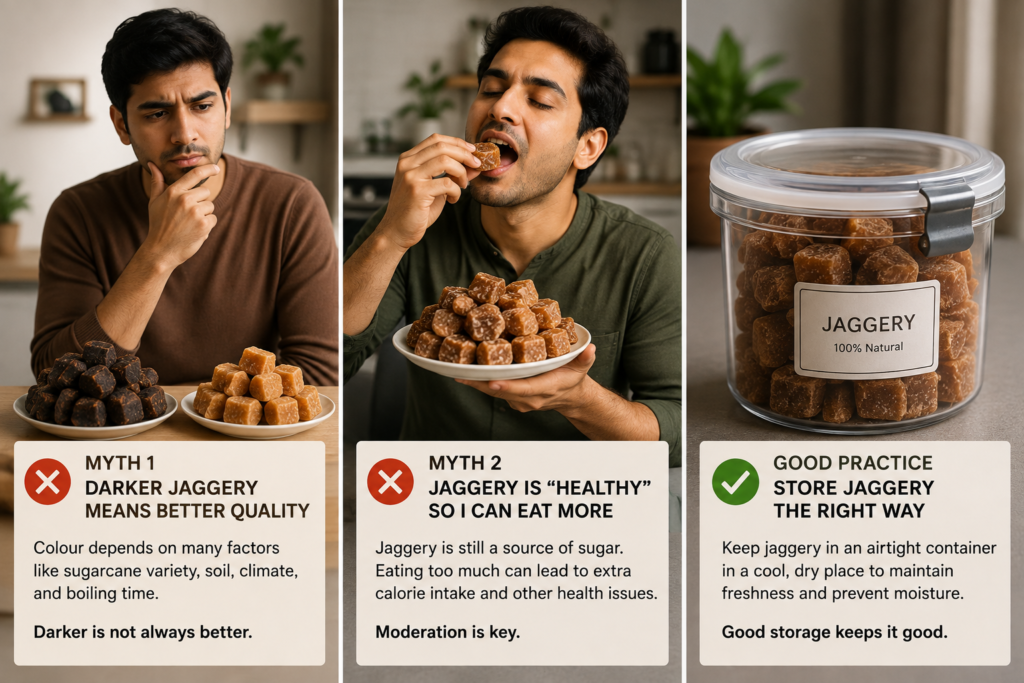
The biggest mistake is assuming that replacing sugar with jaggery makes a high sugar diet healthy.
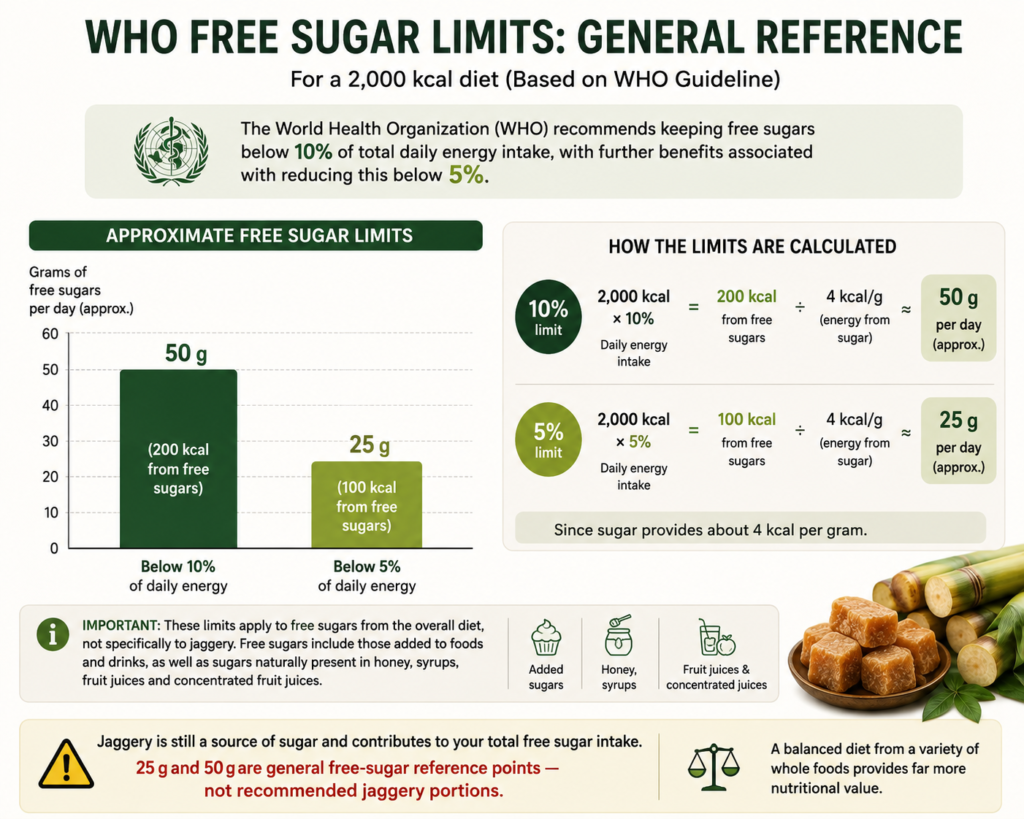
The World Health Organization recommends keeping free sugar intake below 10 percent of total daily energy intake, with a further reduction to below 5 percent providing additional benefits.
This matters especially if your diet already contains sweetened tea, biscuits, desserts, packaged drinks, sweets, and other sources of added sugar.
Someone eating several servings of jaggery every day can still consume too much sugar.
People managing diabetes, blood glucose, weight, or other dietary concerns should discuss their individual intake with a qualified healthcare professional rather than assuming jaggery is automatically suitable.
How Much Jaggery Should You Eat?
There is no single ideal quantity that works for everyone.
Your overall diet, activity level, calorie needs, and existing sugar intake all matter. A practical approach is to use jaggery as a sweetener rather than treating it like a nutritious snack.
The goal should be moderation.
Common Mistakes People Make
Mistake 1: Believing jaggery is sugar free
Jaggery is a sugar based sweetener. It should still contribute to your overall sugar intake.
Mistake 2: Choosing colour over quality
Darker jaggery is not automatically better, and lighter jaggery is not automatically worse. Colour can be influenced by sugarcane variety, processing, heating, and other factors.
Mistake 3: Assuming natural means unlimited
Natural and healthy are not interchangeable terms. Portion size still matters.
Mistake 4: Ignoring hygiene and storage
Good quality jaggery should be produced hygienically, packed properly, and protected from excess moisture and contamination.
So, is jaggery good for health? It can be a sensible alternative to refined sugar when used thoughtfully, particularly if you value traditional processing, flavour, and the small amount of minerals naturally retained in jaggery.
But it is important to keep expectations realistic. Jaggery is still a concentrated sweetener. The healthiest choice is not simply switching from white sugar to jaggery and continuing to consume large quantities. It is reducing excessive sweetness overall and building a balanced diet around whole and minimally processed foods.
For consumers, the best approach is simple: choose well made jaggery, use it in moderation, and judge your diet as a whole rather than relying on one ingredient to provide health benefits.
Select the fields to be shown. Others will be hidden. Drag and drop to rearrange the order.