Cost of Jaggery: Factors That Influence Price and Quality
Learn what affects the cost of jaggery, jaggery price, and jaggery rate per kg. Understand quality factors before making your next purchase.
When you compare the cost of jaggery across local markets, supermarkets, and online stores, the price difference can be surprising. One kilogram may cost much less than another, even though both look similar at first glance. The reason lies in how the jaggery is made, the quality of sugarcane, processing methods, hygiene, packaging, and transportation.
As a farmer connected jaggery manufacturer, we have spent more than four years observing every stage of production, from selecting sugarcane to packing the final product. Serving over two lakh customers has also shown us that buyers often focus only on the jaggery price, while factors that influence quality receive much less attention. Evaluating these aspects before buying can help you identify a product that offers better quality and value.
Table of Contents
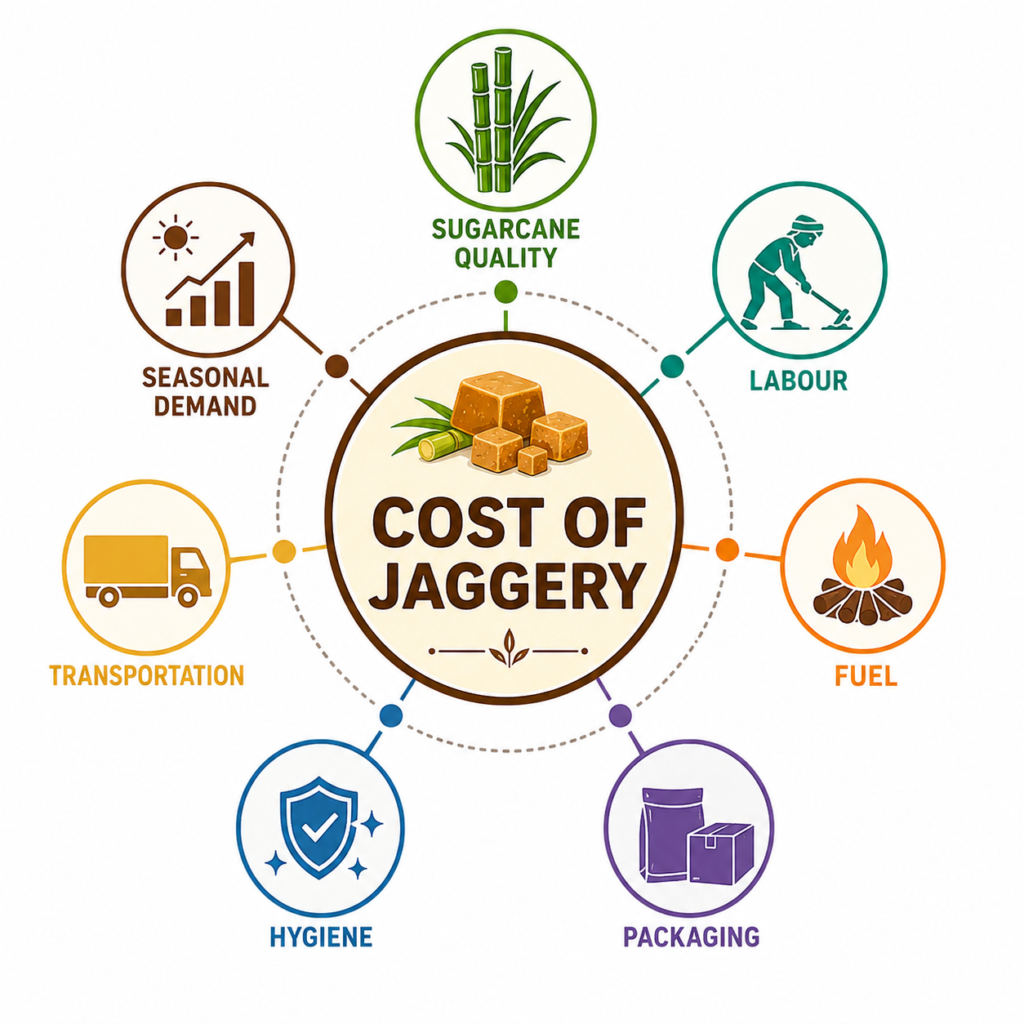
What Determines the Cost of Jaggery
Factors That Influence Jaggery Price
Why Cheap Jaggery Is Not Always a Better Deal
Understanding Jaggery Rate Per Kg
Tips for Buying Good Quality Jaggery
Frequently Asked Questions
Cost Factor
How It Affects Price
Sugarcane Quality
Better quality cane costs more but improves taste and consistency
Manufacturing
Skilled processing increases production cost
Labour
Experienced workers improve quality
Packaging
Food grade packaging protects freshness
Transportation
Longer distances increase overall cost
Seasonal Supply
Prices fluctuate throughout the year
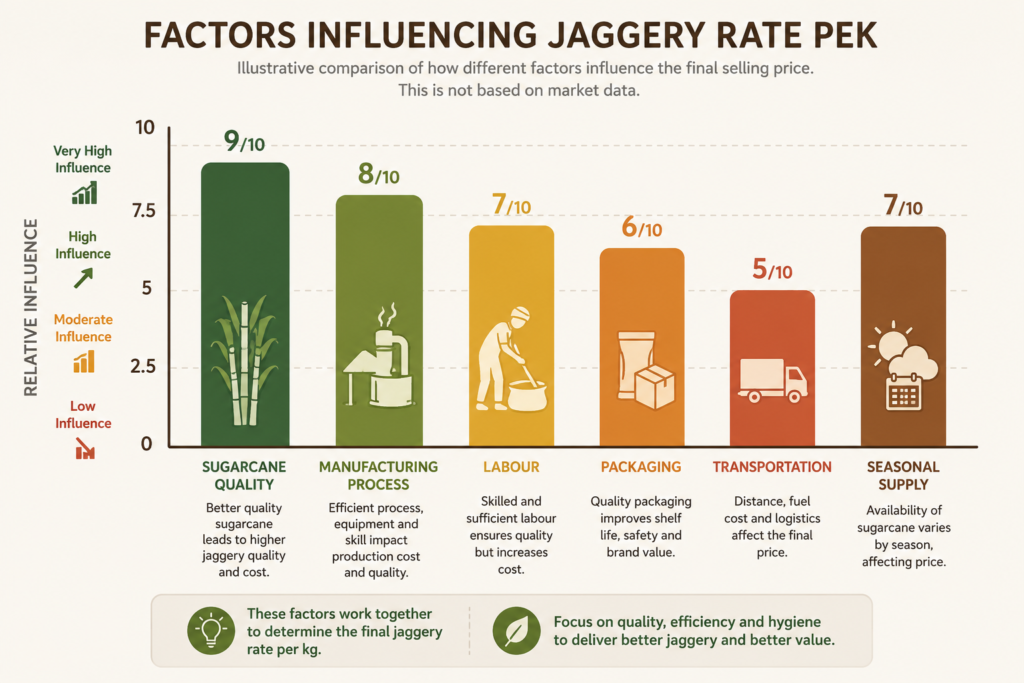
What Determines the Cost of Jaggery
The price of jaggery reflects much more than the sugarcane itself. Every step, from farming to packaging, adds value to the final product.
Key factors include:
Quality of sugarcane
Manufacturing process
Fuel and labor costs
Hygienic handling
Packaging quality
Transportation and storage
Seasonal supply and demand
These factors together determine the final jaggery rate per kg that consumers see in the market.
Factors That Influence the Cost of Jaggery
Quality of Sugarcane
High quality jaggery starts with healthy and mature sugarcane. Better sugarcane usually produces sweeter juice with good mineral content and consistent texture. Farmers who invest in proper cultivation naturally face higher production costs, which are reflected in the final price.
Traditional Manufacturing Process
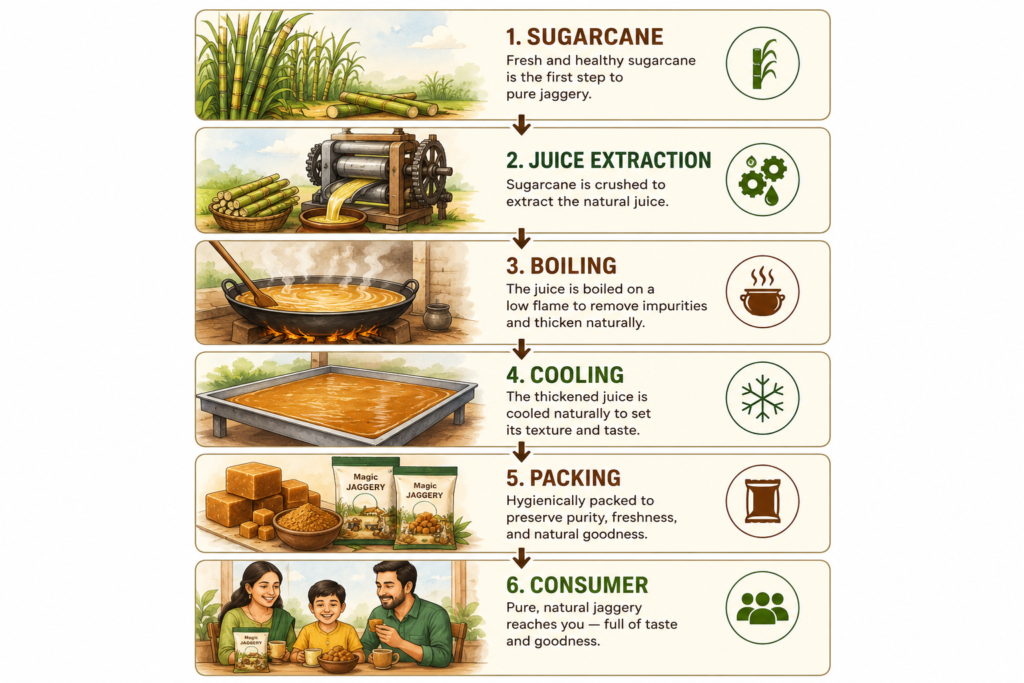
Making jaggery requires careful boiling and continuous monitoring. Maintaining the correct temperature helps preserve flavor, color, and texture.
In our experience, rushing the boiling process may increase production speed, but it often affects consistency and overall quality.
Labor and Skilled Handling
Unlike highly automated sweeteners, jaggery production still depends heavily on skilled workers. From juice filtration to moulding and cooling, experienced handling plays an important role in producing consistent batches.
Hygienic Processing and Packaging
Clean processing facilities, food grade packaging, and proper storage help maintain freshness and reduce contamination risks. These practices increase production costs but also improve consumer confidence.
Transportation Costs
Jaggery is produced mainly during the sugarcane harvesting season. Delivering it safely across different regions requires careful storage and transportation, especially during humid weather.
Why Cheap Jaggery Is Not Always a Better Deal
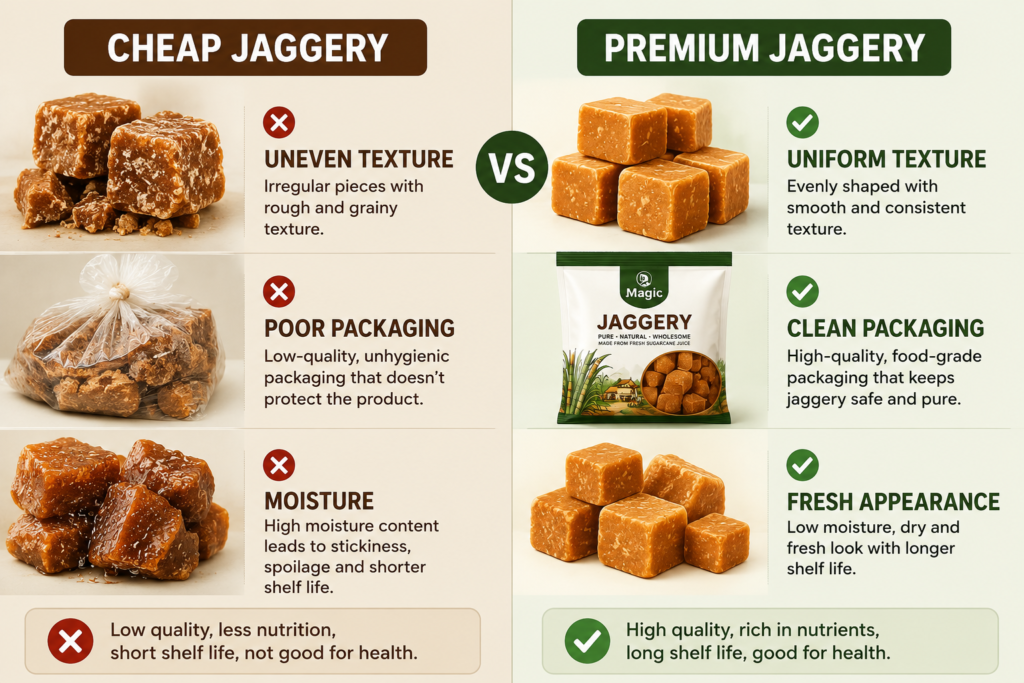
Many buyers compare products only by price. However, the lowest jaggery price does not always provide the best value.
For example, two packs may both weigh one kilogram. One is produced in hygienic conditions using carefully selected sugarcane and proper packaging. The other may involve lower quality raw material or poor storage practices. Although the cheaper option saves money initially, it may not deliver the same taste, freshness, or consistency.
This does not mean expensive jaggery is always better. Instead, buyers should consider both quality and price before making a decision.
Lower Priced Jaggery
Premium Quality Jaggery
Lower grade sugarcane
Carefully selected sugarcane
Basic packaging
Hygienic food grade packaging
Limited quality checks
Better quality control
May vary between batches
More consistent quality
Understanding Jaggery Rate Per Kg
The jaggery rate per kg changes throughout the year due to several market conditions.
Common reasons include:
Seasonal Availability
Fresh jaggery is produced mainly during the sugarcane season. Prices may fluctuate as supply changes.
Regional Production
Areas with higher sugarcane production often have more stable pricing than regions that depend on transportation.
Product Type
Jaggery is available in blocks, powder, cubes, and liquid form. Different processing methods and packaging styles can affect the final cost.
Retail Channel
Buying directly from manufacturers or farmer connected brands may offer different pricing compared with supermarkets or local retailers.
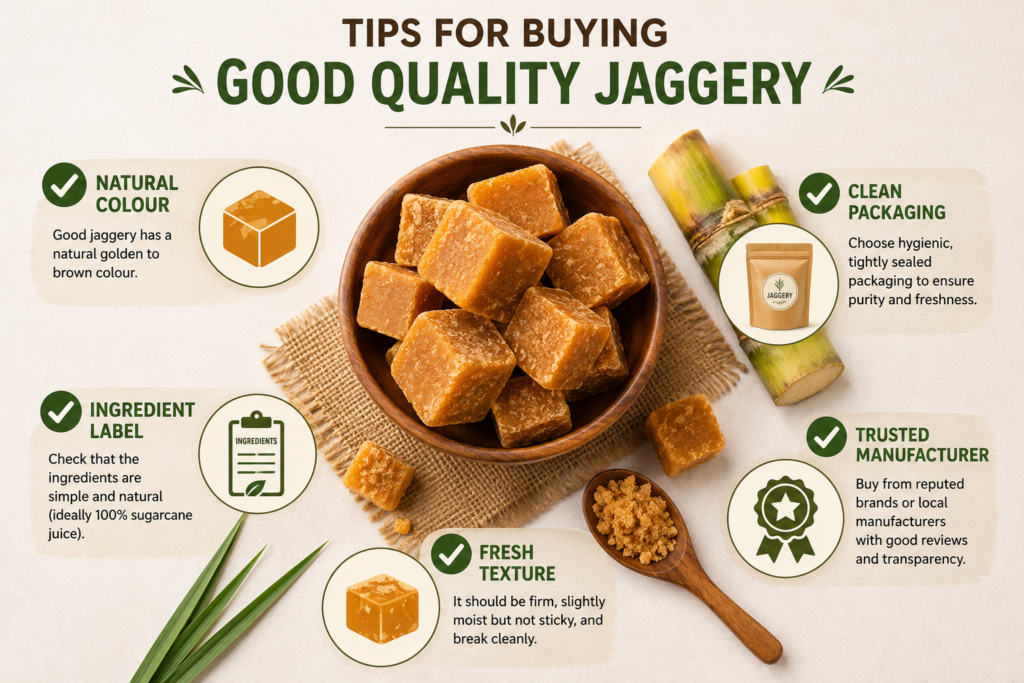
Tips for Buying Good Quality Jaggery
Instead of choosing only by price, use this simple checklist.
Check the Appearance
The appearance of natural jaggery may differ from one batch to another, with colors ranging from golden brown to dark brown due to variations in sugarcane and production methods.
Read the Ingredient List
Choose products that clearly mention sugarcane juice as the primary ingredient.
Look for Proper Packaging
Well sealed packaging protects jaggery from moisture and helps maintain freshness.
Buy from Trusted Manufacturers
Brands that explain their sourcing, processing, and quality practices generally provide greater transparency.
Compare Value Instead of Only Price
A slightly higher cost of jaggery may reflect better raw materials, hygienic production, and reliable quality.
Frequently Asked Questions
What affects the cost of jaggery the most?
Sugarcane quality, production methods, labor, packaging, transportation, and seasonal supply all influence the final cost.
Why does jaggery price vary between brands?
Each manufacturer follows different sourcing, processing, hygiene, and packaging standards, which affect pricing.
What is the average jaggery rate per kg?
The rate varies depending on region, season, product type, and quality. Checking multiple trusted sellers provides a better estimate of current market prices.
Is expensive jaggery always better?
Not necessarily. Quality should be judged by ingredients, processing standards, hygiene, and transparency rather than price alone.
How can I identify good quality jaggery?
Always check for well-packaged products with clear ingredient labeling, a natural appearance, and manufacturers that provide transparent information about their production process and quality standards.
Select the fields to be shown. Others will be hidden. Drag and drop to rearrange the order.